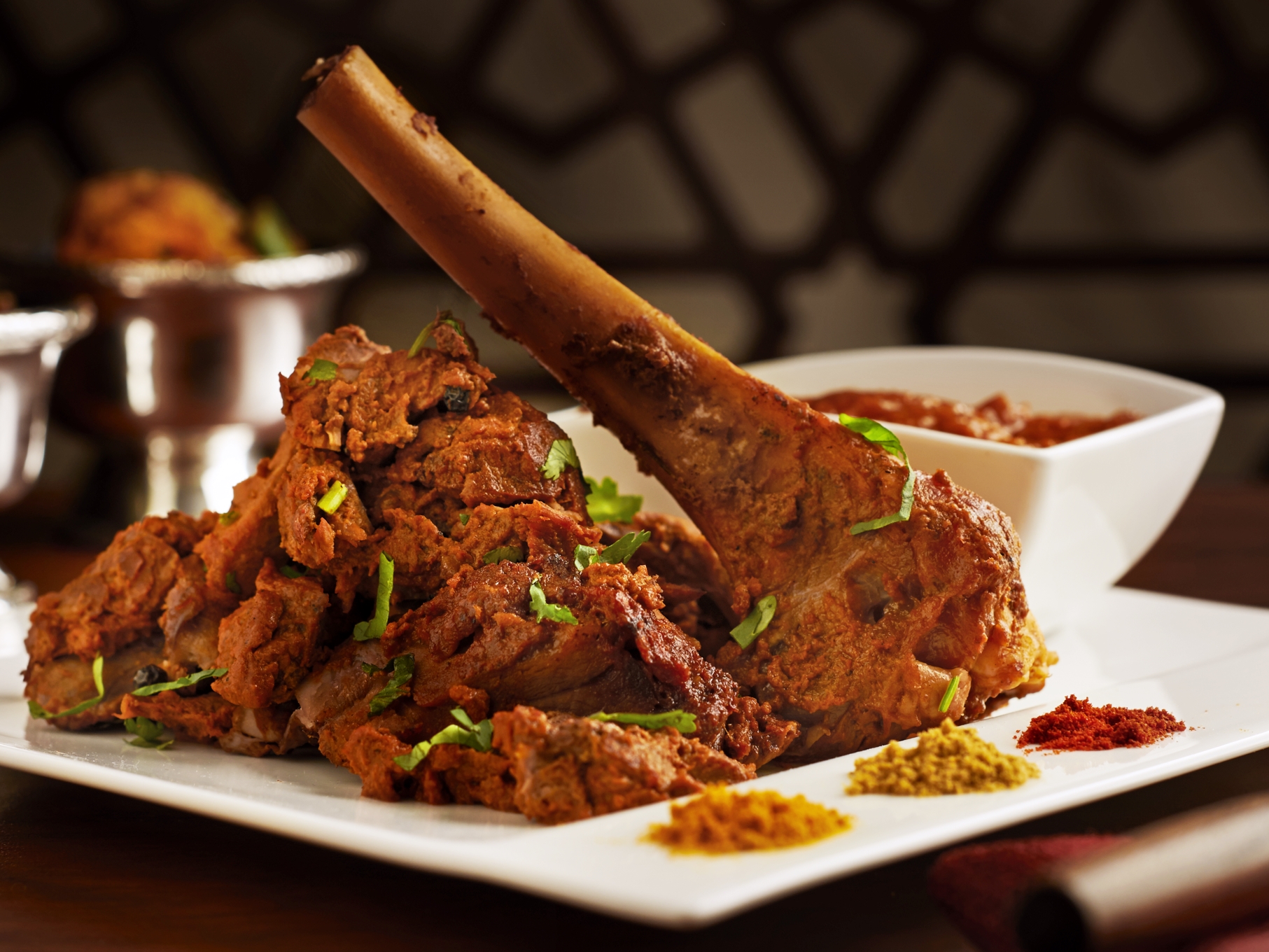
Lucknavi raan, or sikandari raan, is a great dish for entertaining. Cooked properly and carefully, the leg of lamb will fall off the bone and have a delicate taste that features the flavour of the meat.
If you only cook one dish from this cookbook, this would be my recommendation. This is a family favourite for a special or festive occasion. It is spectacular if you spend some effort with the presentation.
This dish originated in Arab and Persian cuisine and comes from the time of Alexander the Great. The term sikandar refers to Alexander. It became part of the Awadhi cuisine with the arrival of the Mughals.
My father claimed this dish as his favourite Indian dish, although there were a few others that he said the same about. This dish was for a family special ocassion, perhaps when all the children – six of them – were together for something special, such as all home from boarding school. From my grandmother’s notes it apparently came from a cook from Lucknow which seems appropriate for the heritage of the dish.
In her time, what she called lamb may well have been mutton or hogget – which if you can get it, is the best meat for this dish. Hogget sits between lamb and mutton in age. Lamb is under one year old, mutton is two years old or older. Hogget is between one and two years old, offering a richer flavor than lamb while remaining more tender than mutton. For some tastes, however, hogget can be gamey.
Despite its difficulty rating, is not particularly hard to prepare. The most important thing is to take your time. The first overnight marination will give that soft texture that is a feature of dishes from this region. Green papaya contains papayin, a natural meat tenderiser.
The second overnight marination is the one that gives the flavour. You can increase this time to several days to allow a deeper development of the flavours. As described, the second overnight marination time of overnight is the minimum required.
The slow cooking allows all the work you have done to come together without drying out the meat and giving it that special flavour and texture.
You cannot substitute ingredients. Using beef, pork or poultry just does not suit this dish. Most of the spices are common, but the unusual ones, such as mace or the toasted besan are vital to the dish.
Simply put; to be successful with this dish do not take shortcuts. Believe me you will be rewarded.
A good butcher is your friend for this recipe. You need to ask for a butterflied leg of lamb, with the shank left in. I have attempted this dish with a whole leg, but the results are not the same. You need a large surface area of meat for the marinades to work effectively.
Calculate the required piece of meat at 250g (9oz) per person, 200g (7oz) in weight loss through cooking, and around 350g (12oz) wastage from the bone. As described below, I am using a 1.5kg (3 lb) leg to feed four people as the main course. Use this formula to scale the recipe for larger serving needs. Scale the spices in the second marinade to match, but you don’t need to scale the first marinade because much of that is discarded.
Because of the two marination periods, you will need to start this dish several days in advance. The recipe calls for two overnight marination periods, but it is improved by the second marination being longer. It does not improve by eating the day after. You develop the flavours before and during cooking, not after.
The best accompaniments for this dish are parathas with some simple raitas or salads. This dish would be the feature of the meal, so don’t complicate things.
the recipe
about
equipment
- small frypan
- roasting pan with lid
- kitchen twine
ingredients
- 1.5 kg lamb leg - butterflied and shank in
first marinade
- ½ green papaya
- 150 ml yoghurt
second marinade
- 2 tsp cumin seeds
- 1 nutmeg - broken open
- 1 stick cassia
- 9 green cardamom pods - broken open
- 1 tsp cloves
- 2 blades mace
- 6 dried Kashmiri chillies
- 2 tsp almonds - slivered
- 3 tbsp chickpea flour - (besan)
- ½ tsp salt
- 2 tbsp ghee
for cooking
- 1 red onion - very finely sliced into rings
- 6 cloves garlic - very finely sliced
- 375 ml water
- 1 tbsp chickpea flour - besan
for serving
- ½ tsp garam masala
- ½ tsp salt
- ½ tsp Kashmiri chilli powder
- 1 cup coriander leaves
- 2 popadoms - cooked and crushed
instructions
first marination
- Blend papaya flesh and yoghurt into a paste. Cut gashes into the meat and work the paste into the surface of the meat. Cover, and refrigerate overnight.1.5 kg lamb leg – butterflied and shank in, ½ green papaya, 150 ml yoghurt
second marination
- Roast the whole spices for the second marinade in a hot small pan until aromatic. Allow to cool and set aside.2 tsp cumin seeds, 1 nutmeg – broken open, 1 stick cassia, 9 green cardamom pods – broken open, 1 tsp cloves, 2 blades mace, 6 dried Kashmiri chillies
- Roast the almonds in the small pan until light golden brown, allow to cool, and then add to the whole spices. Grind to a fine powder.2 tsp almonds – slivered
- In the small frypan, roast the besan, stirring continually until it becomes a pale brown in colour. Allow to cool, then add to the ground spices and almond. Add the salt and mix well.3 tbsp chickpea flour – (besan), ½ tsp salt
- Remove the meat from the refrigerator, and gently remove any excess papaya and yoghurt marinade.
- Pour spices over both sides of the meat, and work well into the surface and gashes. Put any excess into the middle of the meat with the ghee. Roll the butterflied leg and bone into its original shape and use kitchen twine to hold into shape. Cover, and refrigerate overnight or longer.2 tbsp ghee
to cook
- Remove lamb from refrigerator and allow to come up to room temperature.
- Preheat oven to 175 °C
- Place the onions and garlic in the bottom of a roasting pan just large enough to hold the lamb leg. Place lamb fat side up onto the onions and garlic, then carefully add the water to the pan without washing the spices from the meat.1 red onion – very finely sliced into rings, 6 cloves garlic – very finely sliced, 375 ml water
- Cover the dish then place into the oven and cook for three and a half hours. Baste the meat with pan juices every 30 minutes.
- After this time, remove the lamb from the oven and increase the oven heat by turning on the fan, if it has one, or raise the temperature to 190 °C.
- Turn the lamb over very carefully. Place the pan on the top shelf of the oven, uncovered, and cook for a further 20 minutes, basting the meat with the juices every 5 minutes. This should give the lamb a dark crust.
- Carefully remove the lamb from the pan and arrange it on a platter. Cover, and leave to rest for 20 minutes.
- Place the roasting pan on the stovetop on medium high heat Sprinkle the chickpea flour into the juices and mix well. Cook for five minutes stirring continuously to make a thick gravy.1 tbsp chickpea flour – besan
to serve
- Pour half of the gravy over the meat. Put the rest in a bowl at the side of the meat. Put small mounds of garam masala, salt, and Kashmiri chilli powder beside the dish for the guests. Sprinkle with coriander and crushed popadom and serve.½ tsp garam masala, ½ tsp salt, ½ tsp Kashmiri chilli powder, 1 cup coriander leaves, 2 popadoms – cooked and crushed
notes
private notes
This feature is only available to subscribers.
Amazing recipe! It’s a showstopper. Couple of things I changed though – 1. I swapped star anise for nutmeg because I had none at home. 2. I had to manage with one day of marinating as my mutton arrived only the day before. My Mutton Raan got cooked in 3 hours instead of five. I was hesitant because there was no room for mistakes but your notes were so detailed and I decided to take the plunge! I’m glad!
Elizabeth – I am delighted to hear that. It is quite a favourite dish of ours and I am pleased you enjoyed it too. Thanks for the feedback.