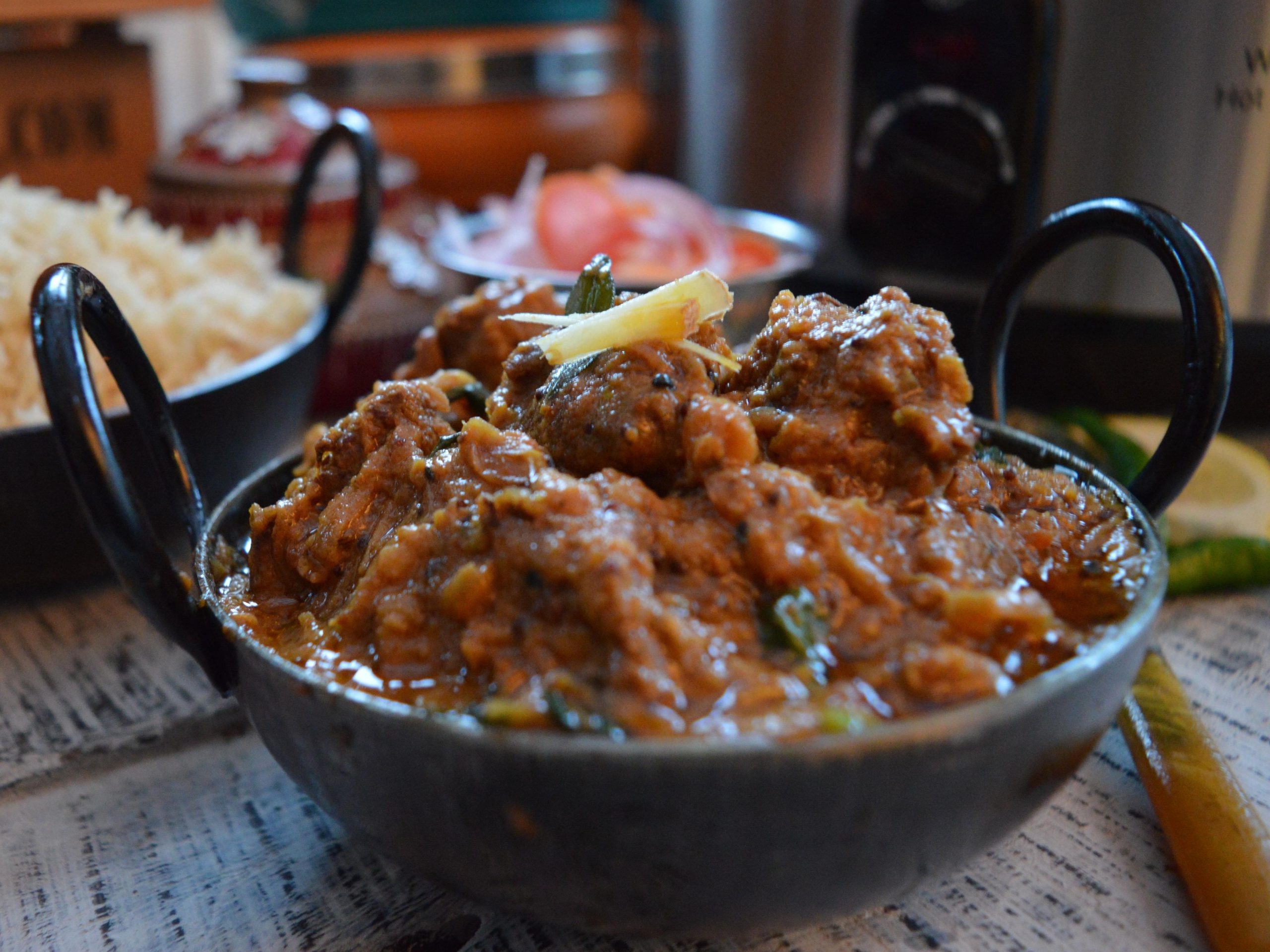
Lamb with lentils and vegetables, or dhansak, is an ages-old Parsi family recipe. It has something for everyone – lamb, lentils, pumpkin, eggplant, and a creamy texture. Another comfort food recipe.
The Parsis have been in India since the 8th century CE. They left Persia and settled on the western coast and Gujerat regions. There is an article in this blog about the wider aspects of their cuisine, but suffice to say it is very compatible with Western taste. Although Parsi restaurants are hard to find, it doesn’t matter because the recipes are best prepared at home.
This dish would be served as the centrepiece of a family gathering. It should be served with brown rice and a kachumber. Brown rice is actually white rice, cooked with caramelised onions. Kachumber is a salad of onion, tomato and cucumber in a vinegar dressing, which helps cut through the creaminess of the pumpkin and toor dal.
This family meal is explained in our Parsi family lunch menu.
This is not an easy dish to make. The preparation is not hard, but getting the balance between sweet, sour and hot requires some patience and constant adjustment. Use salt sparingly. Too much will absolutely spoil this dish, but you do need some to bring out the lentil and vegetable flavours. You may consider adding extra jaggery to increase the sweetness, but we find that using butternut pumpkin and the stated amount of jaggery makes the dish sweet enough without altering the balance between sweet, sour and heat. If you use pumpkin other than the sweeter varieties you will almost certainly need to use some extra jaggery.
This is a lamb dish, with a thick lentil and vegetable coating. It is not a lentil stew with some lamb floating in it. The quantities that are used in this recipe work for me, but you may need to adjust the balance as there is such a variation in the moisture contents of food.
This is a special dish, served for special people every week. It is a great winter dish, as it is wholesome, hearty, and quite healthy.
Take your time, allow some hours to cook it, and you will be rewarded.
the recipe
about
equipment
- large pot
- small frypan
- wide pan with lid
ingredients
- 800 g lamb leg - trimmed and diced
for the dal
- 60 g split pigeon peas - (toor dal)
- 60 g split red lentils - (masoor dal)
- 60 g split black lentils - (urad dal)
- 1 eggplant - chopped into small chunks
- ½ butternut pumpkin - chopped into small chunks
- 1 brown onion - chopped into small chunks
- 1 tsp jaggery
- 1 tsp salt
- ½ cup coriander stalks - coarsely chopped
- ½ cup mint leaves - coarsely chopped
- 500 ml water
for the paste
- 1 tsp cumin seeds
- 1 tbsp coriander seeds
- ½ stick cassia - crumbled
- 6 green cardamom pods
- 12 black peppercorns
- 1 star anise
- 6 cloves garlic
- 30 g ginger
- 2 red chillies
- 2 tbsp dried fenugreek leaves
for the lamb
- 2 tbsp mustard oil
- 1 brown onion - chopped
- 1 tsp ground turmeric
- 3 tomatoes - finely chopped
- 100 ml tamarind water
- 250 ml water
for serving
- ½ cup coriander leaves - chopped
- ½ cup mint leaves - chopped
instructions
to prepare the dal
- Put the lentils, eggplant, pumpkin, onions, jaggery, salt, chopped coriander and mint into a pan with the water. Bring to the boil then simmer for 20 minutes until the lentils have softened. Set aside.60 g split pigeon peas – (toor dal), 60 g split red lentils – (masoor dal), 60 g split black lentils – (urad dal), 1 eggplant – chopped into small chunks, ½ butternut pumpkin – chopped into small chunks, 1 brown onion – chopped into small chunks, 1 tsp jaggery, 1 tsp salt, ½ cup coriander stalks – coarsely chopped, ½ cup mint leaves – coarsely chopped, 500 ml water
to prepare the paste
- Put the cumin and coriander seeds, the cassia stick, cardamon pods, peppercorns and the star anise into a small pan on medium heat. Gently toss the spices while toasting until they become more aromatic. Remove from the heat, set aside and allow to cool.1 tsp cumin seeds, 1 tbsp coriander seeds, ½ stick cassia – crumbled, 6 green cardamom pods, 12 black peppercorns, 1 star anise
- Once cooled, grind the spices with the garlic, ginger and chillies, adding as little water as possible to make a thick paste.6 cloves garlic, 30 g ginger, 2 red chillies
- Add the dried fenugreek leaves to the paste and mix well. Set aside.2 tbsp dried fenugreek leaves
to cook
- Heat the mustard oil on medium heat in a wide pan and fry the chopped onions for 10 minutes, stirring frequently, or until they are golden brown.2 tbsp mustard oil, 1 brown onion – chopped
- Add the spice paste and turmeric, mix well and fry for a few minutes until well combined very aromatic.1 tsp ground turmeric
- Add the tomatoes and tamarind water then fry for about five minutes, stirring occasionally, until the masala is thick and glossy. The oil should be separating from the paste.3 tomatoes – finely chopped, 100 ml tamarind water
- Add the lamb and stir to coat with the masala. Fry for a few minutes, stirring often, until the meat is lightly browned. Reduce the heat, add the water and cover the pan. Simmer the lamb, stirring occasionally, for about 40 minutes or until cooked through and tender. Add a little more water if the mixture starts to dry.800 g lamb leg – trimmed and diced, 250 ml water
- Puree or mash the reserved lentil and vegetable mix and add to the lamb. Bring the mixture up to a simmer, and cook for 10 minutes, stirring often to stop lentils sticking to bottom of the pan. Taste and add salt, if required.
to serve
- Remove from heat, place in warmed serving dish, sprinkle with coriander and mint leaves and serve.½ cup coriander leaves – chopped, ½ cup mint leaves – chopped
notes
private notes
This feature is only available to subscribers.
Hi, The recipe looks great
Do you peel the eggplant or leave the skin on?
Hi Sally, thanks for the feedback. This is a family dish, so you want as little fuss as possible. I leave the skin on. I don’t see any problem if you insist on peeling it, though.