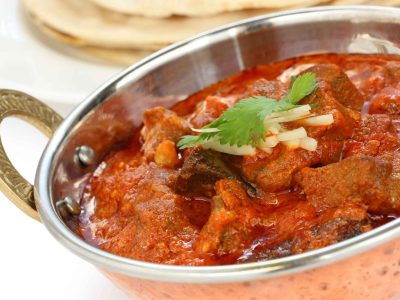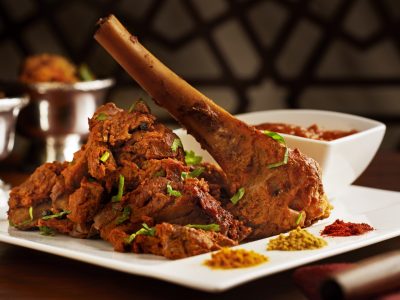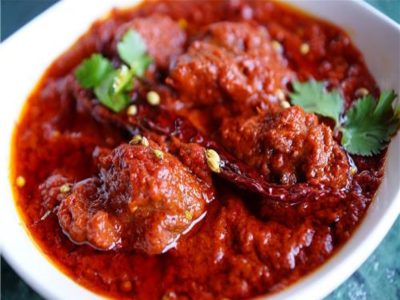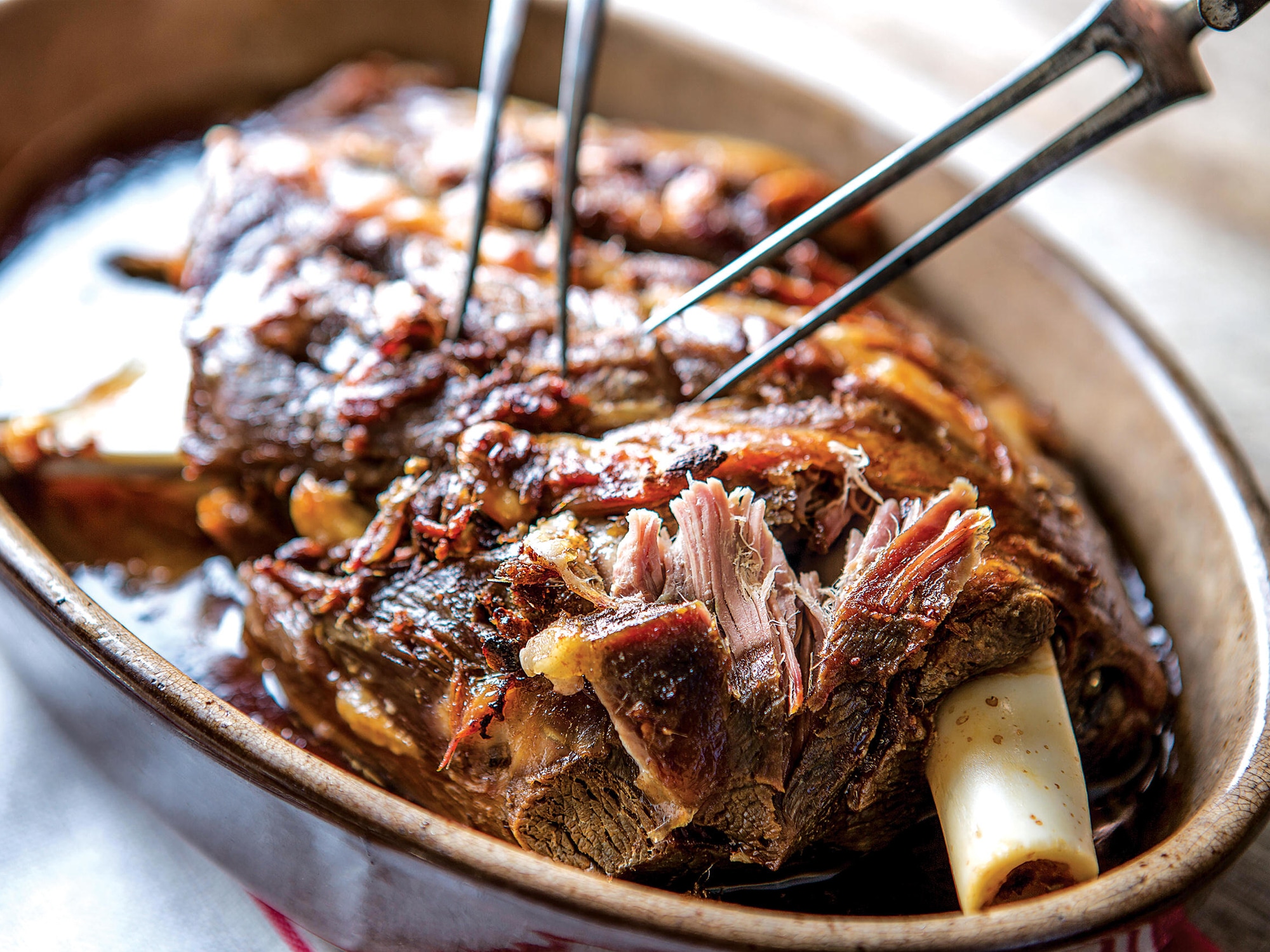
The British loved meat. They loved big, roasted joints, and this slow roasted lamb shoulder recipe is a good example of how the local cooks changed the British approach to such dishes.
The Mughals were also fond of roasted meat. The mughlai cuisine featured such dishes and this cuisine permeated throughout those parts of India where the British lived. It is no surprise that these slow roasted meats would find their way to the British table.
This recipe is amongst the most idiosyncratic in the cookbook and reflects just how my grandmother wanted her lamb cooked. This recipe has the most versions and annotations of any in her notes. It took some time to get it right, apparently.
The British liked to roast fowl, beef and lamb. Pork was unheard of in Calcutta, although available in other parts of India, such as Goa. Beef, was of course, synonymous with all things British and was a regular feature. They liked their beef rare, or certainly in the underdone range. Lamb, however, was treated very differently.
For many Western palates lamb, particularly the fat, was, and still is problematic. If the lamb was well-cooked, as most of the recipes in this book specify, it was well accepted and liked. If the lamb was actually mutton, then it had to be well-cooked, and the fattiness was not a problem.
A lamb roast, prepared as they prepared a beef roast, was never going to work. To remove the fatty taste they worked out you had to cook it for a long time. They also worked out that if you cooked lamb for a long time at a high heat it was inedible, becoming tough and stringy.
Consequently, they arrived at the conclusion that the best way to cook lamb was slowly and use gentle heat. Exactly how the Mughals cooked their lamb.
This recipe makes a beautiful, moist, mildly spiced lamb that can be pulled apart.
The recipe bears a resemblance to the Lucknavi leg of lamb but differs in a few ways. It is nowhere as intricate and is less spiced – although this is far from being a bland dish.
My grandmother would serve this to her colonial guests with potatoes and some green vegetables. Very British. I recommend roti, raita, and bean poriyal.
the recipe
about
equipment
- roasting pan with lid
- small saucepan
ingredients
- 1.5 kg lamb shoulder - bone in
for the marinade
- 50 g ginger - coarsely chopped
- 1 bulb garlic - cloves peeled and coarsely chopped
- 1 red onion - coarsely chopped
- 2 green chillies - coarsely chopped
- 50 g almonds - ground
- 1 tbsp black mustard seeds
- 1 blade mace
- 2 tbsp yoghurt
- 1 tbsp brown vinegar
- 24 curry leaves
for cooking
- 1 red onion - peeled and halved
- 2 tbsp mustard oil
for the gravy
- 1 tbsp black mustard seeds
- 12 curry leaves
- 30 g ginger - finely sliced
- 4 cloves garlic - finely sliced
- 1 green chilli - finely sliced
- 2 tomatoes - pulp removed and finely chopped
- 150 ml thick coconut milk
- ½ lemon - juiced
for serving
- ½ tsp garam masala
- ½ cup coriander leaves
- 1 stem curry leaves
instructions
- Make a smooth paste of the marinade ingredients, except the curry leaves, and set aside.50 g ginger – coarsely chopped, 1 bulb garlic – cloves peeled and coarsely chopped, 1 red onion – coarsely chopped, 2 green chillies – coarsely chopped, 50 g almonds – ground, 2 tbsp yoghurt, 1 tbsp black mustard seeds, 1 blade mace, 1 tbsp brown vinegar
- Make about 12 incisions, about 4cm (1 ½ inches) deep, in the meatiest part of the lamb, then put two curry leaves into each incision. Place the lamb into a roasting pan, just large enough to hold the lamb, without too much extra space.1.5 kg lamb shoulder – bone in, 24 curry leaves
- Cover the lamb with the marinade, then work it into the meat and incisions using your hands. Cover the pan with cling film and refrigerate. Allow to marinate overnight.
to cook
- Remove the lamb from the refrigerator and allow to come to room temperature.
- Preheat oven to 220 °C.
- Tuck the onion halves, cut side down, beside the lamb. Drizzle the lamb with the mustard oil and add a cup of the water to the tray, being careful not to wash any marinade off the lamb. Place the pan into the hot oven, uncovered, and cook for 30 minutes.1 red onion – peeled and halved, 2 tbsp mustard oil
- After 30 minutes, reduce oven to 140 °C. Remove the tray from the oven and gently baste the lamb with the pan juices. Cover the tray, return to oven and cook for a further four hours, or until the meat comes away from the bone. Baste the lamb with pan juices every 30 minutes.
- Once cooked, carefully remove lamb from the tray and place on a serving platter (see notes). Cover with foil and a tea-towel, set aside and allow to rest for 15 minutes.
for the gravy
- Carefully spoon the fat and oil from the tray into a small saucepan. Do not include any of the marinade ingredients or onion yet.
- Heat the saucepan over a medium heat and add the mustard seeds and curry leaves, and fry for one minute, or until the mustard seeds pop. Add the ginger, garlic and chilli slices and fry for two minutes, or until slightly coloured. Add the tomatoes, and fry for a further two minutes to soften.1 tbsp black mustard seeds, 12 curry leaves, 30 g ginger – finely sliced, 4 cloves garlic – finely sliced, 1 green chilli – finely sliced, 2 tomatoes – pulp removed and finely chopped
- Add the remainder of the contents of the baking tray – the marinade, onions and pan juices to the saucepan. Using a fork, masher or a hand blender, make the contents as smooth as possible. Add the coconut milk, mix well and bring to simmer.150 ml thick coconut milk
- Add the lemon juice and check the seasoning. Remove from the heat, and place the gravy into a serving jug.½ lemon – juiced
to serve
- Uncover the lamb, and using two forks, separate the meat a little.
- Sprinkle over the garam masala and coriander leaves. Garnish with the stem of curry leaves.½ tsp garam masala, ½ cup coriander leaves, 1 stem curry leaves
- Serve with the jug of gravy on the side.
notes
private notes
This feature is only available to subscribers.