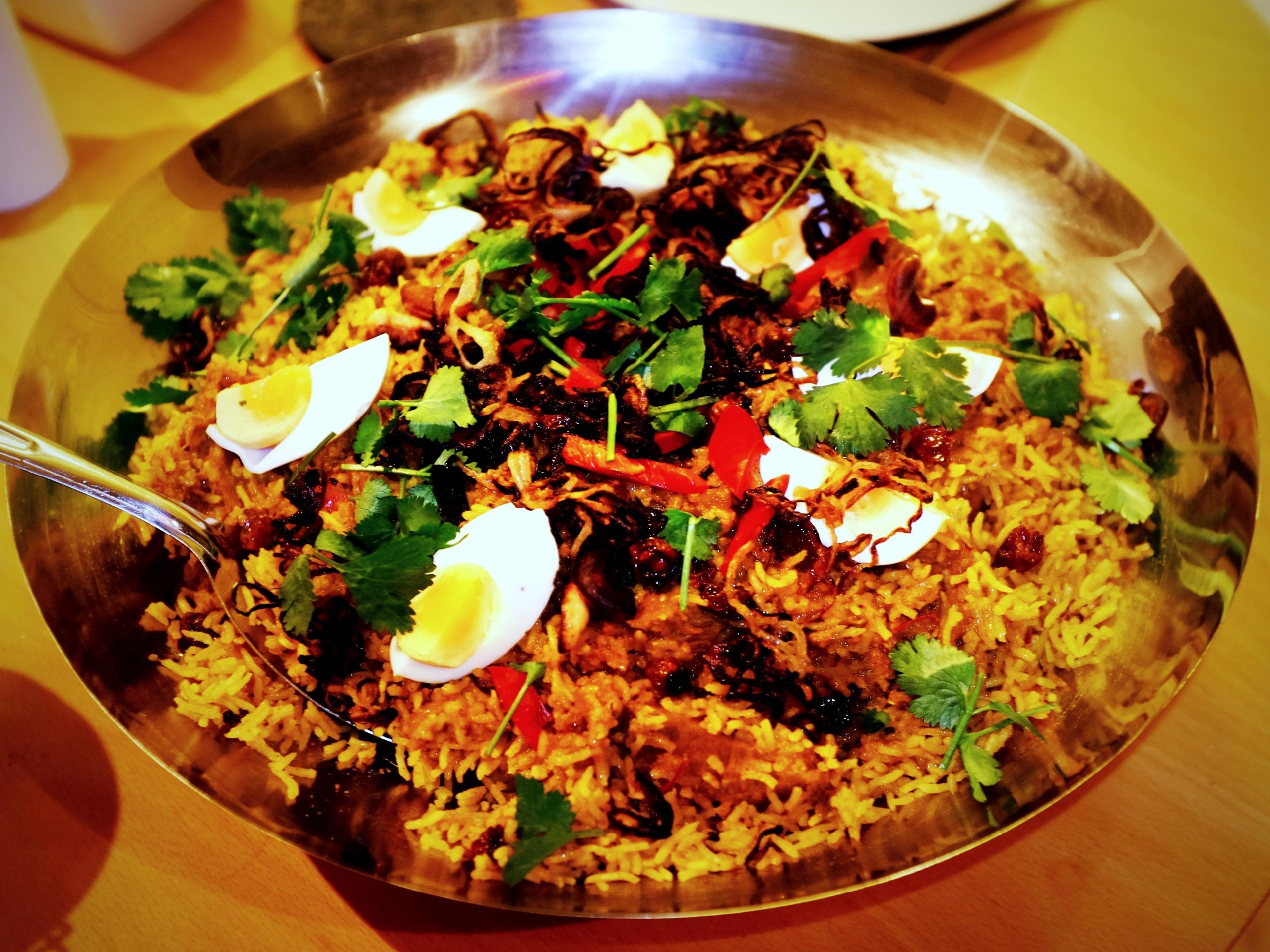
This lamb biryani is one of the best examples of Awadhi cuisine from Lucknow. Lucknavi biryani has wonderfully complex flavours and can be a work of art when presented well. My favourite Indian dish, by a long way.
Was I a condemned man and offered my last meal, this would be my choice. When we have birthdays at home this is the dish of preference. Although, in recent times, the Lucknow leg of lamb is coming closer.
Biryani was popular in the kitchens of the Mughal Emperors who ruled between the early 16th century CE to the early 18th century and it remains a much-loved dish in India today. The recipe was spread across India by merchants and other travellers many centuries ago, which is why there are so many regional variants of this dish.
Biryani is just wonderful. It is not stir-fried rice with a few bits of meat added late, typical of that sold as biryani by curry houses. Getting biryani right is an art, a science and a labour of love. And I choose my words carefully here. Labour is what is required to put this dish on the table.
This is not the easiest dish in this cookbook. If you are cooking Indian food for the first time, this recipe is not a good place to start. It is complicated, and there are several things happening at once.
For a novice with this cuisine add at least one hour to the cooking time to allow you to do one thing at a time. The rice will wait whilst you cook the lamb. Pre-prepare the eggs and the garnish. If you are experienced at this cuisine, then it is not too hard. Chopping and preparing before you start cooking is advised.
For a Lucknow biryani, the meat is cooked in water with spices. The resulting stock (yakhni) is used to cook the rice. Both the cooked (pukki) elements, rice and meat, are then layered together in a deep pot, sealed with dough and baked. This is called the dum pukht method and is used in a number of recipes. This is a quite different technique from other biryanis which will feature in this book. Sealing the pot with aluminium foil is a reasonable compromise to the traditional dough.
There are three special ingredients and they are readily available from good Indian grocers.
Beresta are thinly sliced crispy fried shallots. They are flavourful and add crunch to the recipe. Dishes made with beresta get an aromatic, sweet and smoky taste.
Kewra is an extract that is distilled from pandanus flowers. It is a transparent liquid, and, like rose-water, it gives a wonderful aroma to the dish. Pandanus trees grow almost everywhere in India, yet kewra is mainly a Northern Indian ingredient.
Sella rice is recommended. This is a special form of basmati rice that has been parboiled before milling.
Biryani is a complete meal in itself, suitable for all occasions, whether it is a special meal on a lazy Sunday afternoon or a grand, scrumptious indulgence at an Eid dinner.
For us, it a dish we serve at birthdays with the family.
Serve with kachumber to balance the flavours.
the recipe
about
equipment
- large pot
- slotted spoon
- large bowl
- deep pot with lid
- wide pan with lid
- casserole - see notes
ingredients
- 800 g lamb leg - diced into large pieces – see notes
for the stock
- 300 g lamb bones
- 2 black cardamom pods - broken open
- 10 green cardamom pods - broken open
- 1 stick cassia
- 2 star anise
- 1 tsp black peppercorn
- 10 cloves
- 1 tsp fennel seeds
- 1 tsp cumin seeds
- 1 tsp nigella seeds - (shah jeera)
- 1 blade mace
- 2 indian bay leaves
- 30 g ginger - coarsely chopped
- 4 cloves garlic - coarsely chopped
- 1 tsp salt
- 1½ litres water - cold
for the rice
- 400 g sella rice
- 1 tbsp ghee
- ½ stick cassia
- 1 black cardamom pod - broken open
- 1 star anise
for the lamb
- 150 ml yoghurt
- 3 tbsp dried fried shallots - (beresta)
- 24 raw cashews
- 3 tbsp ghee
- 1 indian bay leaf
- 5 green cardamom pods - broken open
- 1 stick cassia - finely crumbled
- 1 tsp black peppercorn
- 6 cloves
- 1 tsp Kashmiri chilli powder
- 2 blades mace - crumbled
- ½ nutmeg - grated
- 30 g ginger - minced
- 4 cloves garlic - minced
- 2 red chillies - finely sliced
for assembly
- 50 ml milk - warm
- ½ tsp saffron threads
- 2 dried figs - finely chopped
- 1 tbsp raisins
- 2 tsp pandanus essence - (kewra)
- 1 tbsp dried fried shallots - (beresta)
- 1 tbsp ghee
for serving
- 2 eggs - large, free range
- ½ tbsp ghee
- 1 brown onion - finely sliced
- 1 red chilli - finely sliced
instructions
to make the stock
- Place the lamb, the lamb bones and all the ingredients for the stock into a large pot with the cold water. Mix well, bring to the boil, then reduce heat and simmer, covered, for 20 minutes or until the lamb is almost cooked.800 g lamb leg – diced into large pieces – see notes, 300 g lamb bones, 2 black cardamom pods – broken open, 10 green cardamom pods – broken open, 1 stick cassia, 2 star anise, 1 tsp black peppercorn, 10 cloves, 1 tsp fennel seeds, 1 tsp cumin seeds, 1 tsp nigella seeds – (shah jeera), 1 blade mace, 2 indian bay leaves, 30 g ginger – coarsely chopped, 4 cloves garlic – coarsely chopped, 1 tsp salt, 1½ litres water – cold
- Remove the lamb from the stock using a slotted spoon, ensuring any spices are returned to the stock. Remove any large pieces of fat from the meat and put these back into the stock. Set lamb pieces aside, and continue to simmer the stock, covered, for about 30 minutes. Skim any scum from the top of the stock occasionally.
- Remove the stock from heat and strain. Discard the spices and lamb bones. Reserve the stock and lamb in separate containers.
to par-cook the rice
- Place the rice in a large bowl and rinse it in cold water, using your hand to stir it thoroughly. Discard the water and repeat this step twice more to remove any excess starch. Note that after the third rinse that the water will not be clear but will be noticeably less cloudy than after the first rinse.400 g sella rice
- Drain the rice, then cover with luke-warm water. Soak for one hour.
- Put the ghee in a pot with a tight lid and bring to moderate heat. Add the cassia stick, the black cardamom and the star anise, then cook for about 2 minutes or until the spices become fragrant.1 tbsp ghee, ½ stick cassia, 1 black cardamom pod – broken open, 1 star anise
- Drain the rice and carefully add to the ghee. Mix well to ensure each grain is coated with ghee. Fry, stirring frequently, for two minutes, or until the rice starts to stick to the sides of the pot.
- Add 3 cups of the reserved lamb stock to the rice. Be careful as the pot will be very hot and the stock may boil over quickly. Stir gently, cover pot, and reduce heat to very low.
- Cook on low heat for fifteen minutes then turn off the heat. Quickly uncover the pot, fluff the rice with a fork, and then re-cover the pot. Leave until ready to start assembling the dish. Note that the rice will not be completely cooked. It will finish cooking in the oven, later.
to make the lamb
- Whisk together the yoghurt and dried shallots. Set aside.150 ml yoghurt, 3 tbsp dried fried shallots – (beresta)
- Make a paste from the raw cashews with a little cold water. Set aside.24 raw cashews
- Using a large pan, heat the ghee over low-medium heat, then add the bay leaf, cardamom pods, cassia, peppercorns, cloves, and the mace and nutmeg. Fry for two minutes, stirring continuously until spices swell and become aromatic.3 tbsp ghee, 1 indian bay leaf, 5 green cardamom pods – broken open, 1 stick cassia – finely crumbled, 1 tsp black peppercorn, 6 cloves, 2 blades mace – crumbled
- Add the ginger, garlic and red chillies. Mix well and cook for five minutes or until the raw garlic smell has gone.30 g ginger – minced, 4 cloves garlic – minced, 2 red chillies – finely sliced
- Add the Kashmiri chilli powder and grated nutmeg. Mix well and fry for about one minute.1 tsp Kashmiri chilli powder, ½ nutmeg – grated
- Increase the heat to medium and add the lamb. Stir frequently and cook for five minutes, or until the lamb has browned.
- Reduce the heat to medium-low, add the cashew paste and mix well. Now add the yoghurt and shallot mix, one tablespoon at a time, mixing well and bring up to a simmer.
- Add one cup of the reserved stock, mix well and simmer very gently, uncovered, for 10 minutes or until the sauce is very thick and clinging to the meat. Remove from heat.
to assemble
- Preheat oven to 175 °C.
- Put the saffron threads into the warm milk, stir gently and set aside to infuse for 30 minutes.50 ml milk – warm, ½ tsp saffron threads
- Place the cooked rice into a casserole with a tight-fitting lid and spread evenly, but do not compact the rice. Pour half a cup of the reserved stock around the outside of the rice. If there is no stock remaining, use water.
- Pour the saffron and milk evenly over the top of the rice. Now place the figs and raisins evenly over the rice. Sprinkle with the kewra and fried shallots.2 dried figs – finely chopped, 1 tbsp raisins, 2 tsp pandanus essence – (kewra), 1 tbsp dried fried shallots – (beresta)
- Cover the rice evenly with the lamb.
- Break the ghee into small pieces and dot around the top of the dish.1 tbsp ghee
- Seal the casserole well and place it into the oven for 30 minutes.
- Whilst the dish is in the oven, prick the bottom of the eggs with a pin, then place into a small pan with cold water. Quickly bring the pan up to a simmer, then cook the eggs for seven minutes. Remove from heat, drain the hot water, then cover the eggs with cold water. Peel the eggs when cool enough to handle. Set aside.2 eggs – large, free range
- Prepare the onion garnish by heating ½ tablespoon of ghee in a small frying pan. When hot, add the finely sliced brown onion and cook for about 10-15 minutes, or until onions have browned well and starting to caramelise. Remove from heat, and set aside on kitchen paper to remove excess ghee. This onion will become crisp by the time you use it for garnish.½ tbsp ghee, 1 brown onion – finely sliced
to serve
- Place a warmed serving dish over the casserole and carefully invert. Gently scrape any remaining biryani from this pot. Quarter the eggs and distribute them over the dish. Sprinkle with the reserved browned onions and sliced red chilli. Serve.1 red chilli – finely sliced
notes
private notes
This feature is only available to subscribers.