
pescatarian dinner with friends
We recently had our friends Ian and Eileen to dinner with the family. A pescatarian dinner, featuring vegetarian and fish dishes, toned down a little, was what was required.
Ian is a recovering vegetarian, so big meaty dishes were not appropriate. I’ve cooked for Ian before so I know his tolerance for spiciness, but Eileen is a California girl and I wasn’t so sure of her tolerance levels. This is what we came up with.
There seems a lot of food here, but if you are careful with portion control and convert the servings to three you will not end up with wasted food.
Preparing this menu takes some time and planning. You need to start at least one day ahead for some of the dishes.
On the day before, make the paneer, so it can cool and then be marinated. Prepare the fish tikka. Refrigerate the marinated paneer and fish. Remember to take these out of the refrigerator well before your guests arrive so you are not cooking ice-cold ingredients.
Make the dessert, as it can be kept refrigerated until the day of the dinner. Do not do the finishing touches until ready to serve. You should take it out of the refrigerator when you serve the main course, so it is not too cold.
The sauce for the prawns can be made ahead. Prepare it up to the point of adding the prawns, allow it to cool, and then refrigerate. When ready to cook, heat the sauce and add the prawns.
On the day of the dinner, you can make the chapati dough, but don’t roll them out until close to cooking time because they will dry out. You could also make the rice somewhat in advance and keep it warm in the oven.
I would suggest getting everything prepared before the guests arrive. Concentrate on getting the two tikka dishes served. Once you are ready to cook the main course you start by putting the cauliflower in the oven. I would suggest the mushrooms, next. The prawn and fish dishes cook very quickly so can be started last. I would start cooking the chapatis at the same time – as they cook you can cover them with a damp tea towel and keep them warm in the oven.
There is quite some work to put this on the table, but it is well worth the effort.
the menu
starters

main course

accompaniments

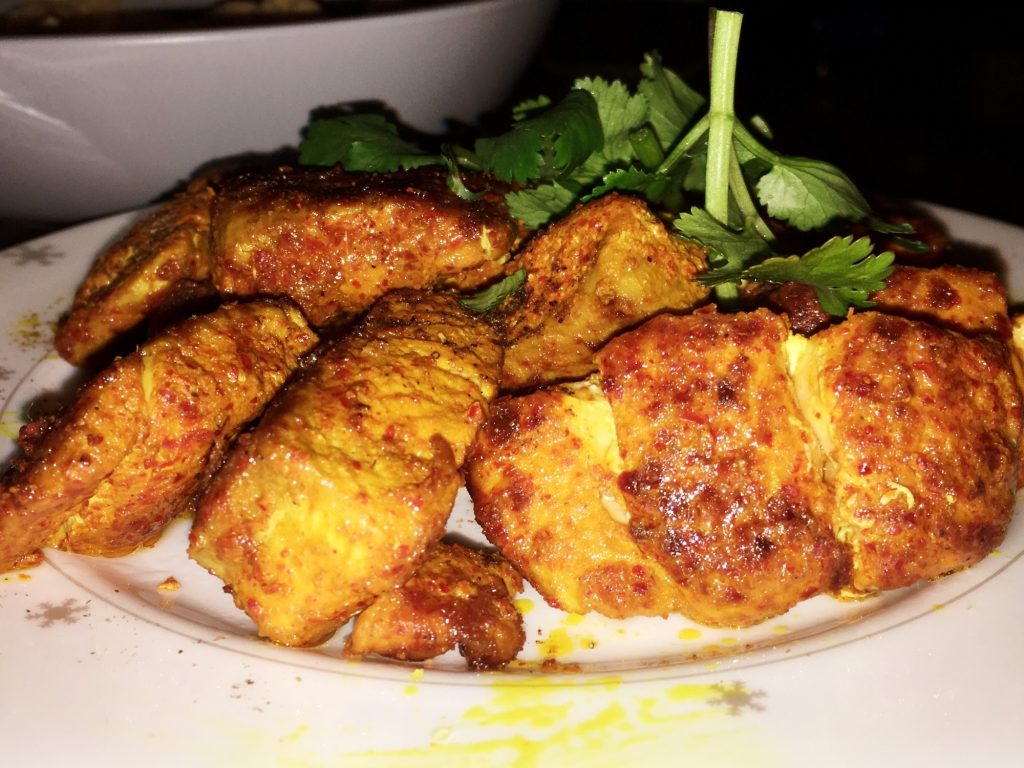
fish tikka
equipment
- large glass bowl
- wide pan with lid
- slotted spoon
ingredients
- 300 g fish - skinned, boned and diced into bite-sized cubes
- 1 tsp ground turmeric
- 1 tsp Kashmiri chilli powder
for cooking
- 2 tbsp gingelly oil - see notes
for serving
- ½ tsp chaat masala
- ¼ tsp salt
- ½ cup coriander leaves - coarsely chopped
- 1 lemon - quartered
instructions
- Wash and dry the fish pieces, then place them into a small glass bowl.
- Sprinkle over the turmeric and chilli powder, then toss until fish is evenly covered in spices. Cover with cling-wrap and refrigerate overnight.
to cook
- Remove the fish from the refrigerator and allow to come to room temperature. Toss occasionally to distribute the spices.
- Heat the oil in a wide pan. Place the fish into the oil, then cook for three to five minutes, tossing frequently. The amount of time will depend on the fish and how you like your fish cooked. The fish will start to flake when done.
- Remove the fish from the pan using tongs or a slotted spoon and place onto absorbent paper. Sprinkle with the chaat masala and salt. Gently toss.
to serve
- Place fish onto a serving bowl or plate and garnish with the coriander leaves, Place the lemon quarters at the side of the plate and serve.
notes
private notes
This feature is only available to subscribers.
nutrition
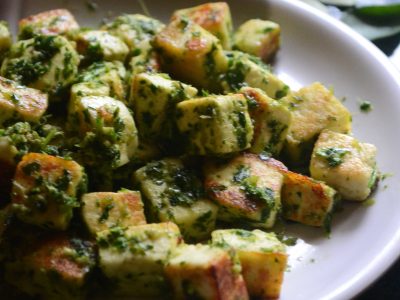
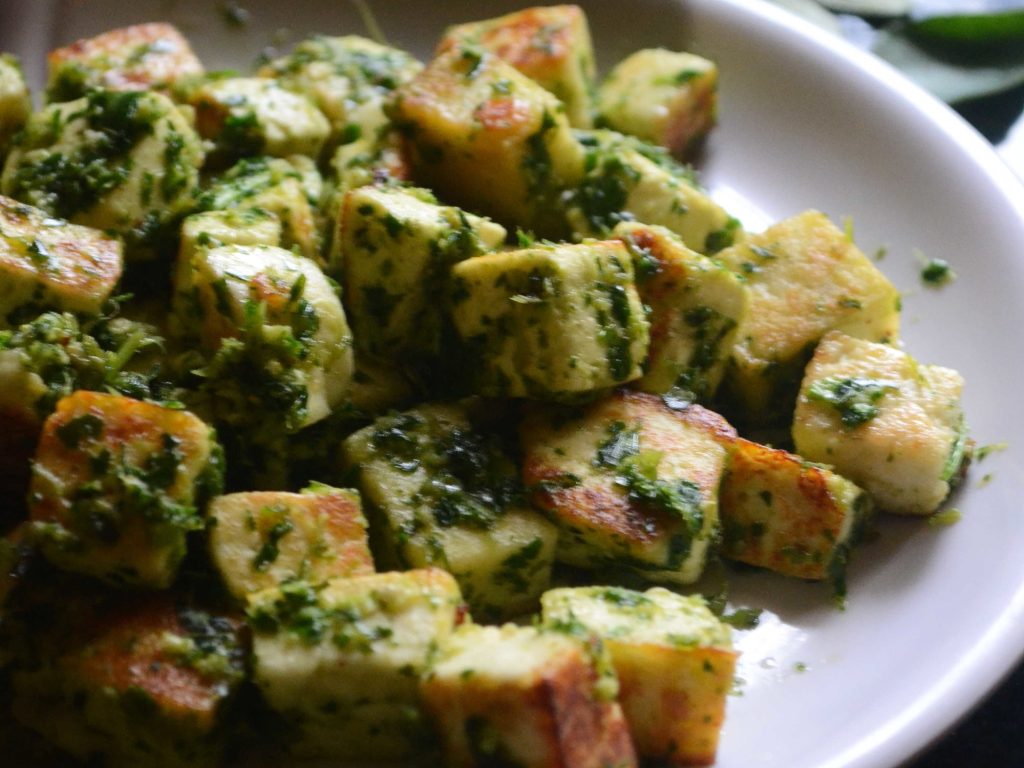
green paneer tikka
equipment
- small frypan
- large bowl
- baking tray
ingredients
- 300 g paneer - cut into small pieces, see notes
for the marinade
- 1 tsp cumin seeds
- 3 cloves garlic
- ½ cup mint leaves - chopped
- ½ cup coriander leaves - chopped
- 2 green chillies - chopped,
- 20 g ginger - chopped
- ½ lemon - juiced
- ½ tsp black salt
for cooking
- 1 tbsp gingelly oil - (see notes)
for serving
- ½ tsp sesame seeds
- ½ tsp black sesame seeds
- 1 lime - quartered
instructions
for the marinade
- Place a small frypan on medium heat and add the cumin seeds. Toast the spices until they become aromatic then remove from the heat. When cool enough to handle, grind to a fine powder. Set aside.
- Grind all the remaining marinade ingredients to a smooth paste with as little water as possible.
- Put the marinade into a large bowl. Add the paneer and mix well to cover it all with the marinade. Cover with cling-wrap and refrigerate overnight.
to cook
- Remove marinated paneer from the refrigerator and allow to come to room temperature.
- Preheat oven to 180 °C
- Place the marinated paneer onto a baking tray. Cover the pieces with any remaining marinade. Drizzle over the oil and cook for 10 minutes until the cubes are a little browned on the outside.
- Whilst the paneer is cooking, toast the sesame seeds in small hot pan for about two minutes. Once they start to change colour, add the black sesame seeds and cook for a further 30 seconds until they release their aroma.
to serve
- Remove from oven, toss with the sesame seeds, then place on serving dish and serve with the lime wedges.
notes
private notes
This feature is only available to subscribers.
nutrition
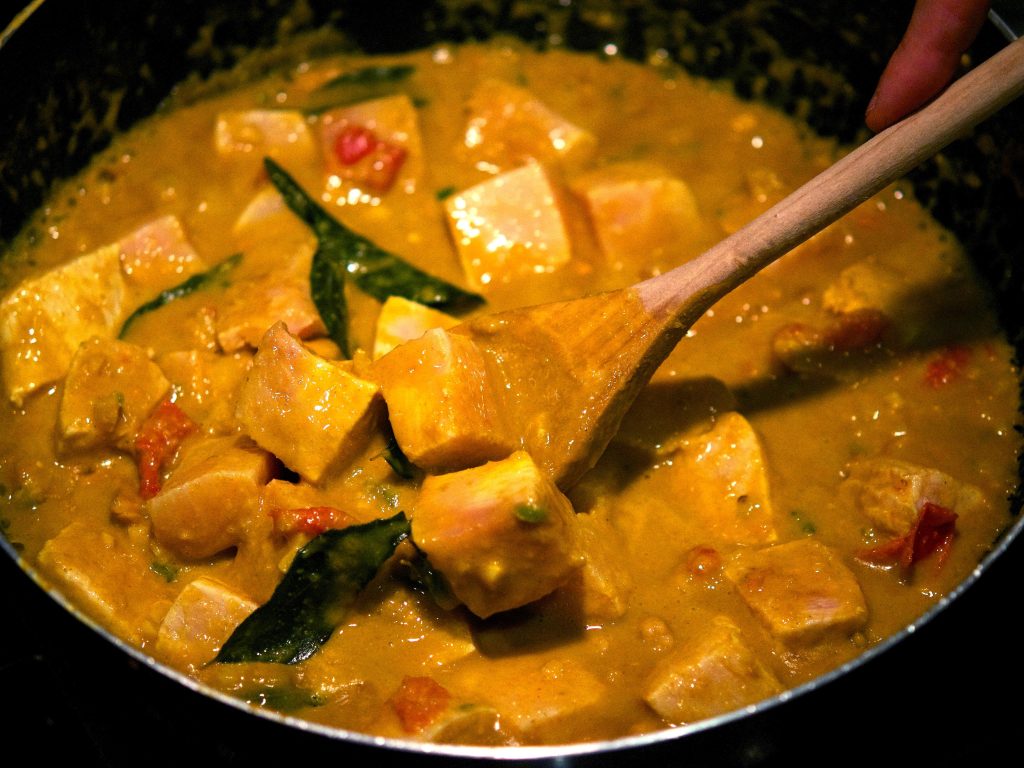
Keralan fish curry
equipment
- kadai
ingredients
- 800 g cod - cut into 5cm cubes
for the masala
- 3 tbsp mustard oil
- 2 tsp ground turmeric
- 2 tsp Kashmiri chilli powder
- 1 red onion - halved and thinly sliced
- 1 tsp salt
- 40 g ginger - finely shredded
- 2 red chillies - finely sliced
- 6 curry leaves
- ½ tsp dried fenugreek leaves
- 200 ml thick coconut milk
to serve
- 1 tsp jaggery - grated
- 2 tbsp coriander leaves
- 1 tsp garam masala
instructions
- Heat the oil in a kadai or wok over medium heat, until the impurities smoke off and the oil becomes colourless. Remove from the heat and allow the oil to cool before the next step to prevent the spices from burning.
- Add the turmeric and chilli powder and cook for one minute, using the residual heat in the oil.
- Return to a medium-low heat and add the onions and sprinkle with salt. Cook for ten minutes or until the onions have softened.
- Add the ginger and chillies, mix well, and cook for a further two minutes.
- Add the curry and fenugreek leaves. Mix well.
- Increase the heat to medium and add the fish. Fry for five minutes,gently tossing to cover the fish.
- Stir in the coconut milk and bring to a simmer. Cook for five minutes, or until fish is starting to flake and the coconut milk has reduced to a creamy consistency. Add water if needed to maintain this consistency.
to serve
- Gently stir in the jaggery and coriander.
- Remove from heat, sprinkle with garam masala and serve.
notes
- Ling, kingfish or Spanish mackerel or any other firm white fish could be used instead of cod.
private notes
This feature is only available to subscribers.
nutrition
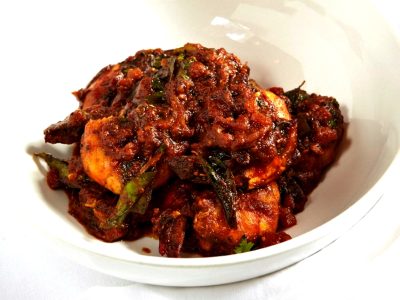
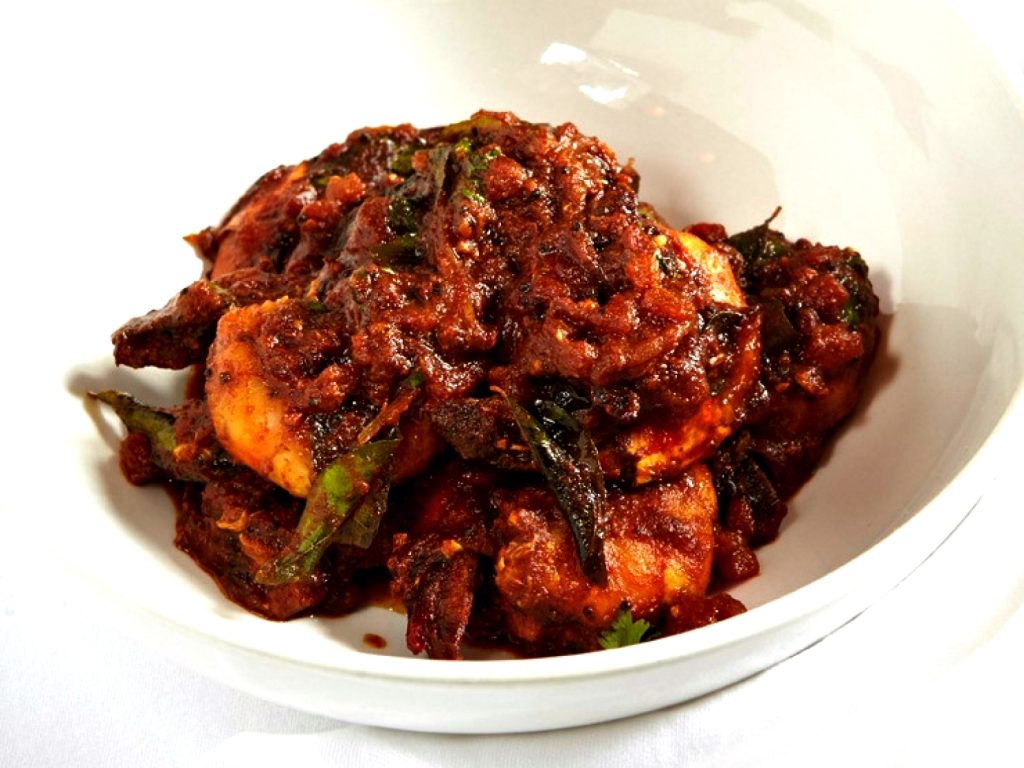
Malabar prawns in tomato and tamarind
equipment
- small frypan
- food processor - see notes
- kadai
ingredients
- 1 kg prawns - shelled and deveined
- 2 tsp cumin seeds
- 2 tsp coriander seeds
- 1 tsp fenugreek seeds
- 75 g shallot - chopped
- 3 cloves garlic - chopped
- 40 g ginger - chopped
- 3 red chillies - chopped
- 6 tomatoes - pulp removed and chopped
for cooking
- 4 tbsp gingelly oil - see notes
- 1 tbsp black mustard seeds
- 20 curry leaves
- 2 tsp Kashmiri chilli powder
- 1 tsp ground turmeric
- 250 ml tamarind water
- 2 red chillies - coarsely sliced
- 1 tsp salt
to serve
- 1 tsp garam masala
- ½ cup coriander leaves
instructions
- Heat a small pan over medium heat. Once hot, put the coriander, cumin and fenugreek seeds into the heated pan. Toast the spices for a few minutes until they become aromatic. Remove from the heat and allow to cool. Once cooled, grind spices to a fine powder and set aside.
- Add the shallots to a food processor and blend to a smooth paste, adding as little water as possible, Remove from processor and set aside.
- Add the ginger, garlic and three red chillies to the food processor, and again adding as little water as possible, blend to a smooth paste. Remove from processor and set aside.
- Add the tomatoes to the food processor and blend to a smooth puree. Remove from processor and set aside..
to cook
- Heat the oil in a kadai or wok over medium heat. When hot, add the mustard seeds and fry for 30 seconds, then stir in the shallot paste and fry gently for about 10 minutes, or until softened and lightly golden-brown.
- Add the ginger, garlic and chilli paste. Stir well, and fry for a further 5 minutes, until the raw garlic smell has gone.
- Add the curry leaves, chilli powder, coriander, cumin and fenugreek powder, and turmeric. Stir well and fry for two minutes.
- Add the tomato puree and mix well. Simmer for about 15 minutes. You need the raw tomato smell to disappear and the sauce to become rich and reduced. The oil should start to separate from the mixture.
- Add the tamarind water, sliced red chillies and salt. Stir well to get the sauce recombined with the oil. Simmer for 5 minutes.
- Add the prawns, cook for a further 10 minutes or until they are pink, and just cooked through.
to serve
- Immediately remove pan from the heat to stop prawns over-cooking and transfer to a serving dish. Sprinkle with the garam masala and coriander leaves and serve.
notes
- Fishmongers may sell prawns that have already been shelled and deveined. If that is the case, you only require around 600g (21oz) of prawns.
- Choose the largest prawns you can get for the best appearance of this dish.
- If you don't have a food processor, use a mortar and pestle. The paste does not have to be at puree consistency. If that is too hard, just chop the ingredients very finely, and increase the cooking time when you add the tomatoes. It won't be the right consistency, but it willl work.
- Gingelly oil is Indian sesame oil. It is very different from the Asian sesame oil, being much less intense in flavour. Substitute with vegetable oil if unobtainable.
private notes
This feature is only available to subscribers.
nutrition
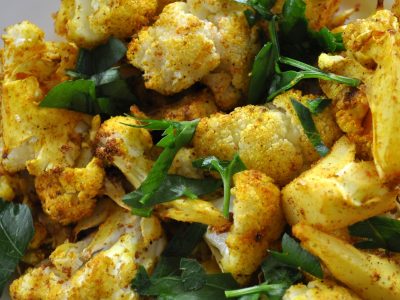
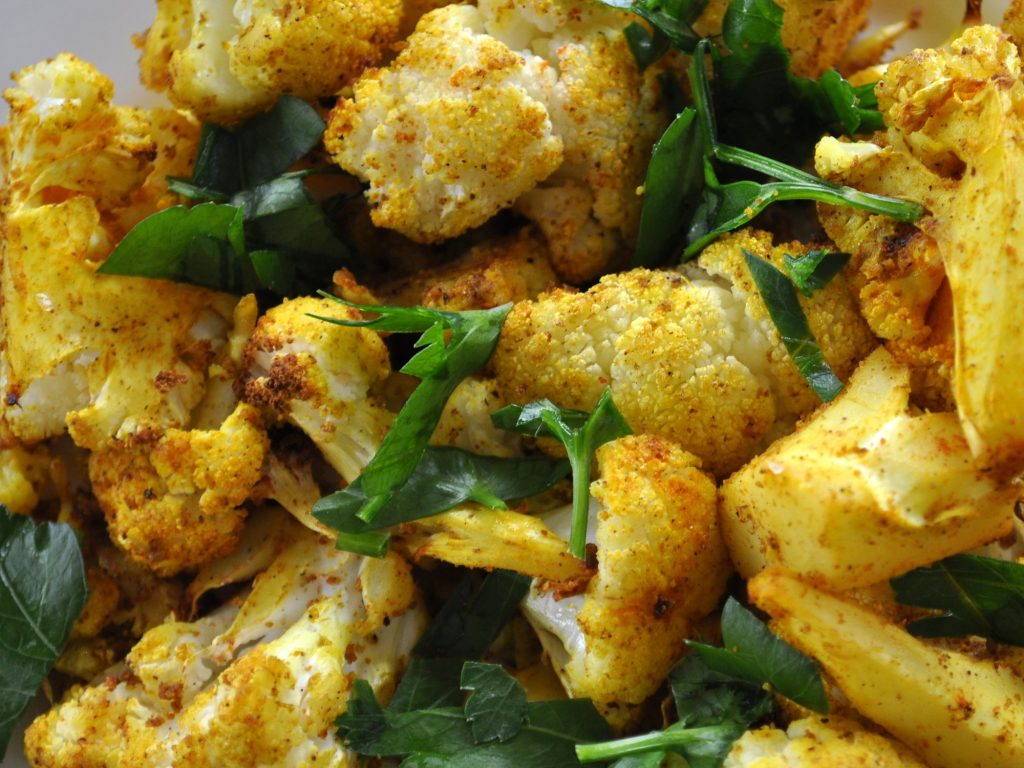
roasted cauliflower
equipment
- small frypan
- oven tray
- wide pan with lid - optional (for stovetop cooking)
ingredients
- 800 g cauliflower - trimmed
- 1 tsp ground turmeric
- 6 tbsp ghee
- 2 tsp panch phoran - see recipe
- 1 tsp salt
to serve
- 1 green chilli - finely sliced
- 1 cup coriander leaves
- 1 lemon - juiced
instructions
- If cooking this in the oven, preheat it to 200 °C.
- Cut the cauliflower into generous florets. See the notes below for a description of a simple technique.
- Place the florets in a bowl, and sprinkle with the turmeric. Gently toss to ensure each floret is coated.
- Heat the ghee in a small frypan over medium heat. Add the panch phoran and fry until the seeds just start to crackle, which will only take a minute. Be very careful not to burn the spices.
- Slowly pour the ghee over the cauliflower and ensure that each piece is well coated. Sprinkle over the salt and gently toss the florets. Keep tossing until there is no ghee left in the bottom of the bowl and it has all been absorbed into the cauliflower.
to cook in the oven
- Transfer the cauliflower to a baking paper-lined oven tray. Place them cut side down where possible. If there are loose seeds left in the bowl sprinkle them over the florets.
- Place the cauliflower in oven and roast for 40 minutes or until tender. A few mildly burnt tips are acceptable.
to cook on the stovetop
- Put the cauliflower, cut side down, in a wide pan on medium-low heat. Gently pour a cup of water around the cauliflower, trying not to wash the spices off the florets.
- Cover the pan and cook for 40 minutes, stirring occasionally. The cauliflower will absorb the water and soften.
to serve
- Transfer the cauliflower to a serving dish, and toss with the sliced chilli, coriander, and lemon juice.
notes
- A medium-sized head of cauliflower weighs about 800g.
- To make the florets, cut the cauliflower vertically into four wedges. Then cut the hard stem out of each of the wedges and gently separate them into large florets. This will provide a lot of flat edges to help with the cooking and colouring of the florets.
private notes
This feature is only available to subscribers.
nutrition
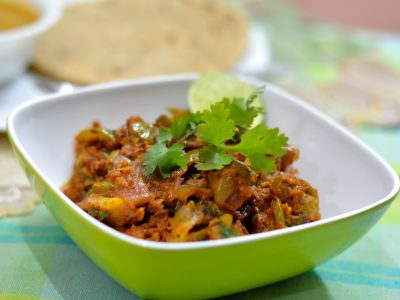
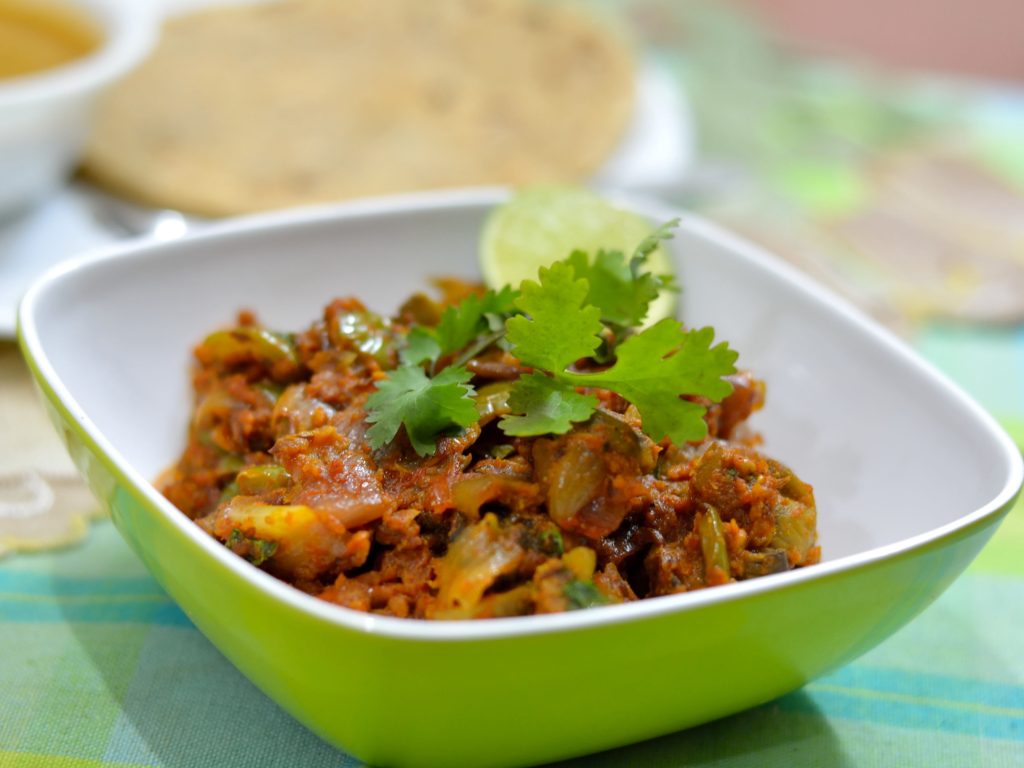
mushroom dopiaza
equipment
- kadai
- small frypan
ingredients
- 200 g button mushrooms - cleaned and halved
- 3 brown onions
for cooking
- ½ tsp coriander seeds - toasted and ground
- ½ tsp cumin seeds - toasted and ground
- 4 cloves garlic
- 20 g ginger
- 3 tbsp gingelly oil
- 1 Indian bay leaf
- 1 tsp salt
- 2 tomatoes - pulp and seeds removed, finely chopped
- ½ tsp ground turmeric
- ½ tsp Kashmiri chilli powder
for serving
- ½ tsp garam masala - (see recipe)
- 1 green chilli - very finely sliced
- ½ cup coriander leaves - coarsely chopped
instructions
preparation
- Peel the onions. Quarter one and a half onions. Halve each of the quarters then peel the layers apart giving you triangular pieces of onion. This is the onion you will add later, after browning them. Finely chop the remaining one and a half onions. Set both of these aside separately.
- Heat the gingelly oil over medium-low heat in a kadai or wok. When hot add the triangular pieces of onion. Stirring frequently, cook the onions until the edges start to turn brown which should take around ten minutes. You want the onions to be cooked but not softened.
- Remove the onions with a slotted spoon, place on kitchen paper to drain and set aside.
to cook
- Heat a small pan over medium heat and add the coriander and cumin seeds. Toast for two minutes, or until spices darken and become aromatic. Remove from heat and allow to cool a little. Transfer to a grinder and grind to a smooth powder. Set aside.
- Make a paste from the garlic and ginger, adding as little water as possible. Set aside.
- Using the same pan, add the bay leaf, finely chopped onions and sprinkle with salt. Stirring frequently, cook the onions until they become translucent and are starting to brown – this will take around 10 minutes.
- Add the ginger-garlic paste, mix well and fry until the raw aroma of ginger-garlic goes away, which should take two minutes.
- Add the chopped tomatoes, mix well and fry for one minute.
- Add the turmeric and Kashmiri chilli powders, ground coriander and cumin seeds. Mix well.
- Fry this mix until the tomatoes soften and the oil starts to separate, which will take around five minutes. Gently mash the mixture with the back of a spoon.
- Add the mushrooms and mix well. Fry, stirring continuously. The mushrooms may release moisture and you need to continue to fry until this moisture dries. You want the mushrooms just cooked, in a dry masala. This should take around 10 minutes. The mushrooms should not become soft.
to serve
- When the mushrooms are cooked, add the reserved onion triangles, garam masala, green chilli and coriander leaves. Mix well and once hot, serve.
private notes
This feature is only available to subscribers.
nutrition
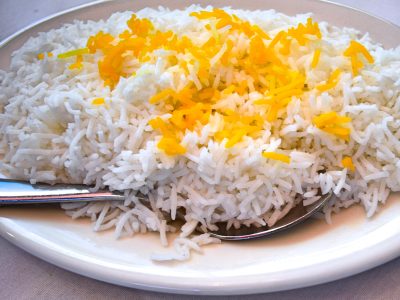
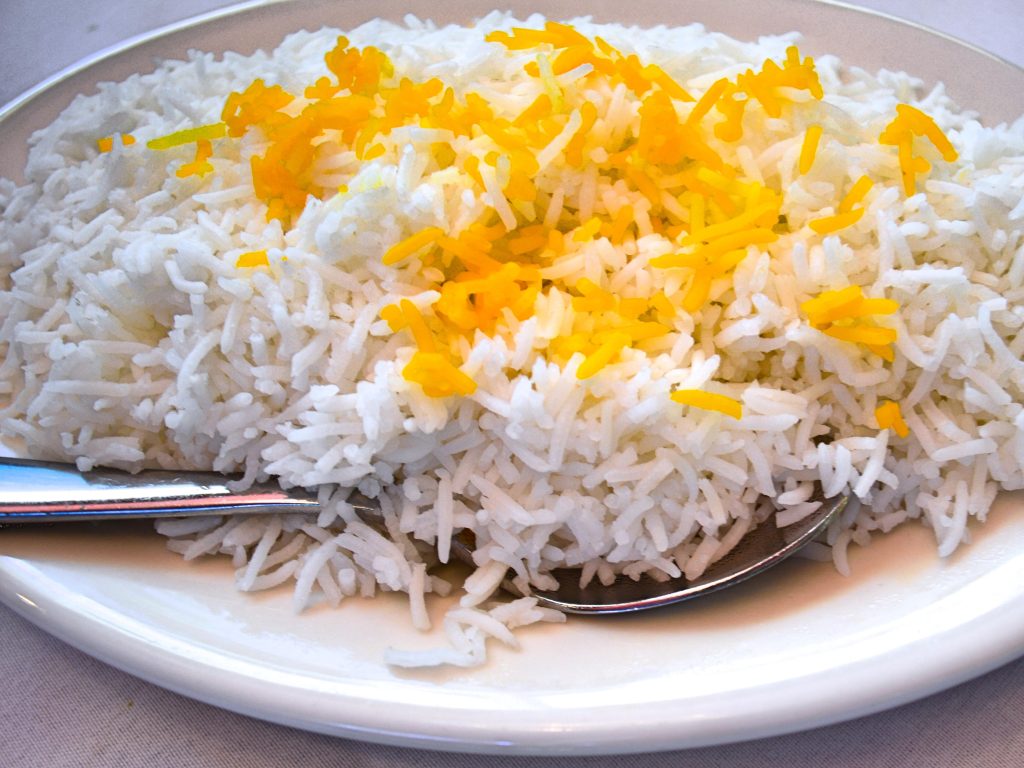
decorative basmati rice
equipment
- large bowl
- deep pot with lid
- small bowl
ingredients
- 400 g basmati rice
- 750 ml water
- 1 tsp salt
- ¼ tsp ground turmeric
- 40 ml water
instructions
- Place the rice in a large bowl and rinse it in cold water, using your hand to stir it thoroughly. Discard the water and repeat this step twice more to remove any excess starch. Note that after the third rinse that the water will not be clear but will be noticeably less cloudy than after the first rinse.
- Drain the rice, then cover with luke-warm water. Soak for 30 minutes.
- Drain the rice and put it into the pot. Add the water and salt. Bring to a boil over medium-high heat, uncovered.
- When the water starts boiling, reduce the heat to very low. Cover and cook for 15 minutes. Do not open the pot during cooking or the steam and heat will escape.
- Mix the turmeric and water in a cup, then add a handful of the rice from the pot. Mix well and add back into the pot. Gently fluff the rice with a fork and cover the pot with a tea towel. Replace the lid and allow to rest for a further ten minutes before serving.
to serve
- Gently fluff the rice with a fork to distribute the colour and serve directly from the pot
notes
private notes
This feature is only available to subscribers.
nutrition
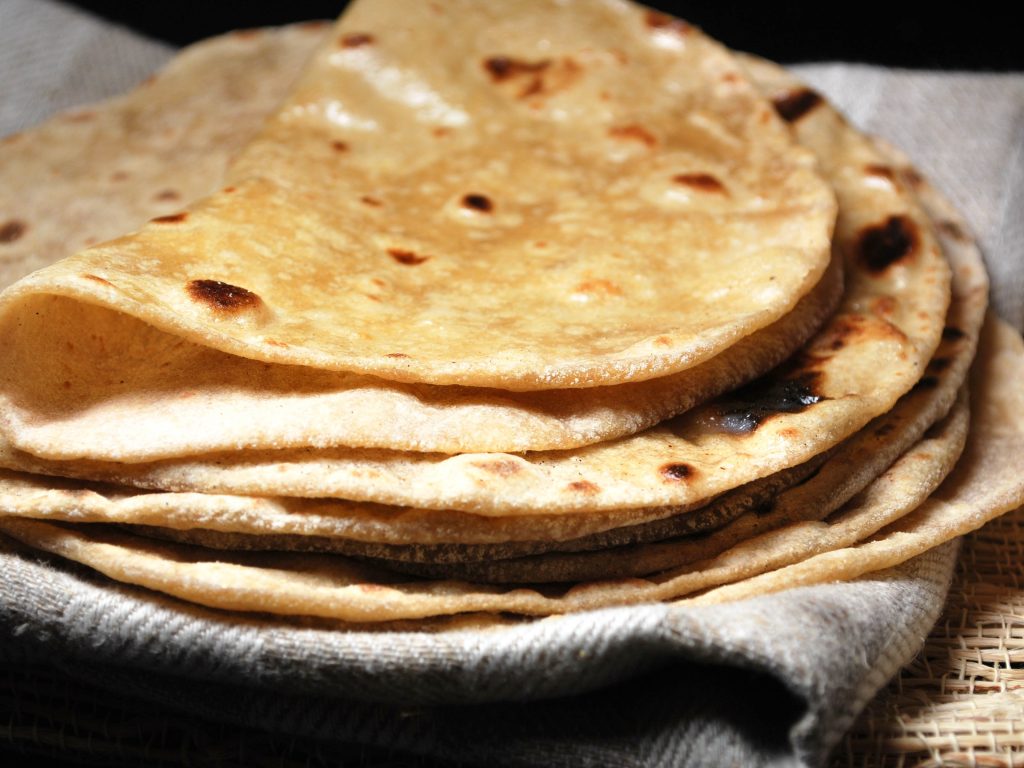
chapatis
equipment
- large bowl
- tawa - or griddle
ingredients
- 1 tbsp jaggery
- 200 ml water - warm
- 500 g whole wheat flour - (atta)
- 1 tsp salt
- 6 tbsp ghee - softened
instructions
- Add the jaggery to the warm water and stir until dissolved. Set aside.
- Mix the flour and salt into a bowl and rub in the ghee. Start adding the warm water and jaggery and knead in the bowl to form a soft, smooth dough. The longer you knead the dough the softer the chapatis will be. Divide the dough into eight equal balls. Cover, and set aside to rest for half an hour.
- Roll each ball into a thin disc. Heat a tawa or flat griddle over medium heat, cook the chapati for about one minute on each side until it has golden patches. Serve immediately.
notes
private notes
This feature is only available to subscribers.
nutrition
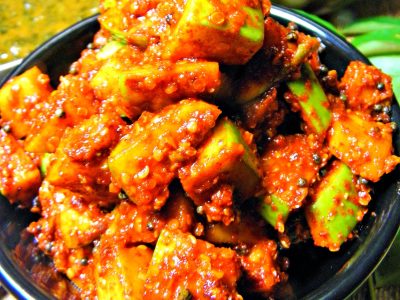
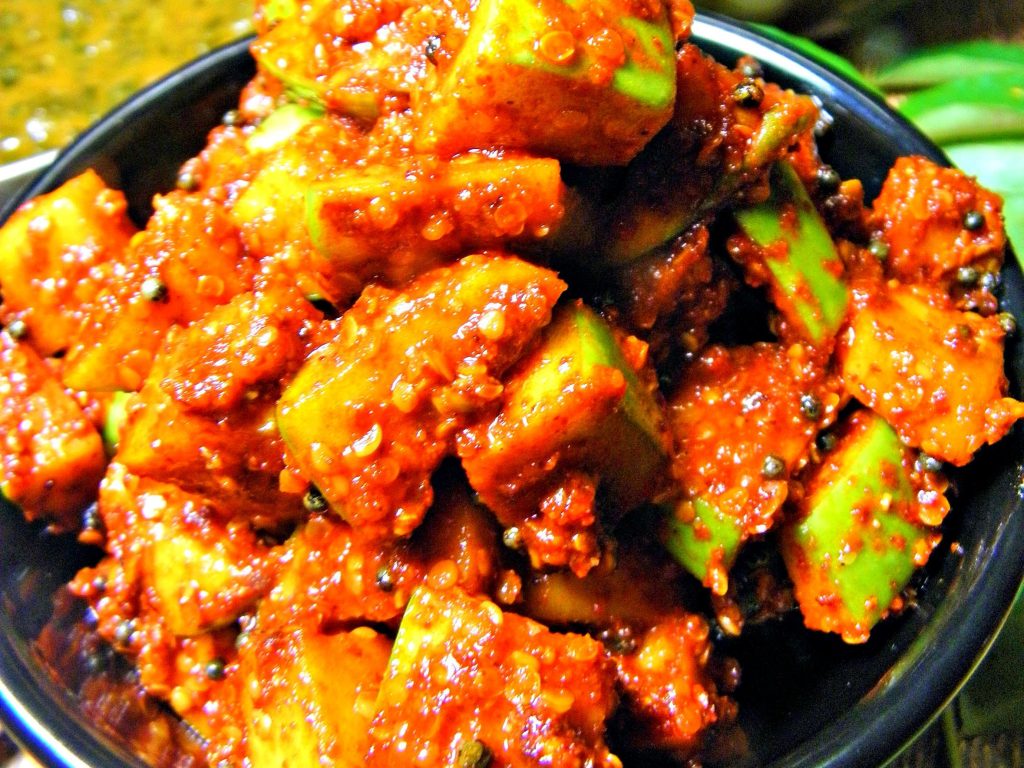
green apple achaar
ingredients
- 1 green apple
- ½ tsp salt
- ½ tsp ground turmeric
- ½ tsp Kashmiri chilli powder
- ¼ tsp asafoetida powder
- 1 tbsp mustard oil
- 3 dried red chillies - crumbled
- 1 tsp black mustard seeds
- ½ tsp nigella seeds
- ½ tsp cumin seeds
instructions
- Wash the apple and dry it completely, making sure there is no moisture or dust. Core and cut or shred the apple into small pieces.
- In a small bowl, combine salt, turmeric powder, asafoetida and cut apple. Marinate for 30 minutes
- Heat a small pan on medium heat, and add the mustard oil. When hot, add the crumbled chillies, mustard, nigella and cumin seeds.
- When the seeds splutter, remove them from the heat and allow them to cool.
- When cooled, add to the apple mixture, and mix well. Cover and leave for 15 minutes, stirring occasionally, then serve.
notes
- This is a fresh pickle and will keep only a few days even if refrigerated.
private notes
This feature is only available to subscribers.
nutrition
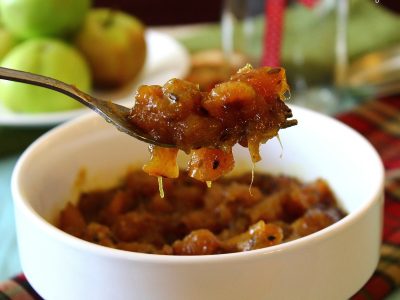
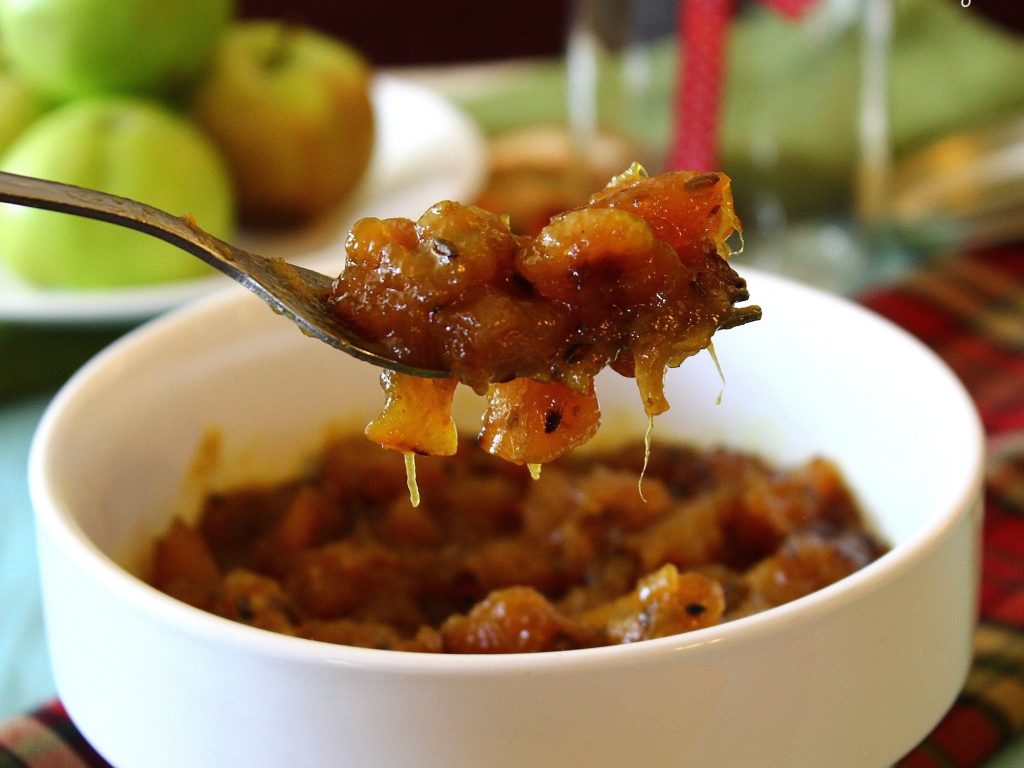
Bengali mango chutney
ingredients
- 2 mangoes - semi-ripe
- 1 tbsp gingelly oil - see notes
- ½ tsp panch phoran - see recipe
- 20 g ginger - grated
- ¼ tsp red chilli powder
- ¼ tsp garam masala
- ¼ tsp asafoetida powder
- 2 tbsp jaggery
- ½ tsp salt
instructions
- Thoroughly wash the mangoes, then dry them with a clean towel. Peel and chop the mangoes into 1cm pieces.
- Heat the sesame oil in a pan over a medium heat. When hot, add the panch phoran and fry for one minute until sizzling.
- Add the ginger and fry for one minute, stirring continuously.
- Add the chopped mango, chilli powder, garam masala and asafoetida. Mix well, and simmer for two minutes.
- Add the jaggery and salt, mix well and simmer for two minutes, or until mixture thickens.
- Remove from heat, and transfer to a serving bowl. Cover, and allow to cool before serving.
notes
- Indian sesame oil is called gingelly oil, and is not the same as the Chinese variant, being less intense in flavour. A vegetable oil could be used as a substitute.
- The chutney should thicken noticeably as it cools.
- The chutney will only keep for 2-3 days in the refrigerator.
private notes
This feature is only available to subscribers.
nutrition
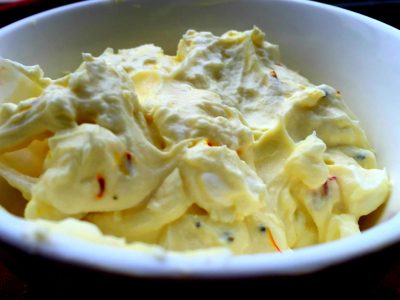
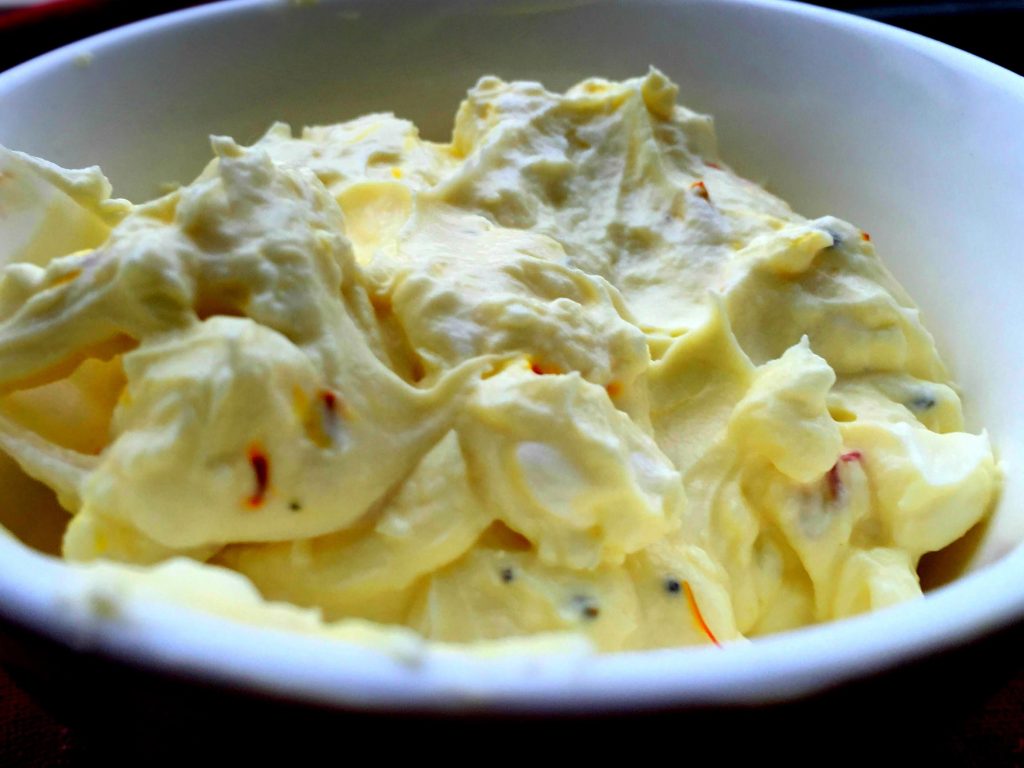
shrikhand
equipment
- colander
- muslin square
ingredients
- 600 ml yoghurt
- 15 ml milk
- ¼ g saffron threads
- 6 green cardamom pods - seeds only
- 4 tbsp jaggery - grated
- 3 tbsp raw pistachios - chopped
- 3 tbsp almonds
to serve
- 1 tbsp almonds - sliced
- 1 tbsp mint leaves - finely chopped
instructions
- Line the colander with the muslin square and pour in the yoghurt, spreading evenly. Cover, place in a bowl and refrigerate overnight.
- Warm the milk and add the saffron. Allow the saffron to infuse the milk for at least ten minutes, stirring occasionally.
- Grind the cardamom seeds to a coarse powder.
- Turn the strained yoghurt into a mixing bowl and sift the grated jaggery into the yoghurt. Mix well until it has completely dissolved.
- Add the saffron, milk, ground cardamom, pistachio and almond. Mix well.
- Cover and refrigerate until ready to serve.
to serve
- Garnish with almond and mint. Serve.
notes
- Dried fruit can be added. Adding one tablespoon each of finely chopped dried mango and dried papaya when adding the almonds and pistachios will take it to another level.
- You could also substitute 200ml of crème fraiche for 200ml of yoghurt for an even richer dessert, with a subtle sweet and sour flavour.
private notes
This feature is only available to subscribers.