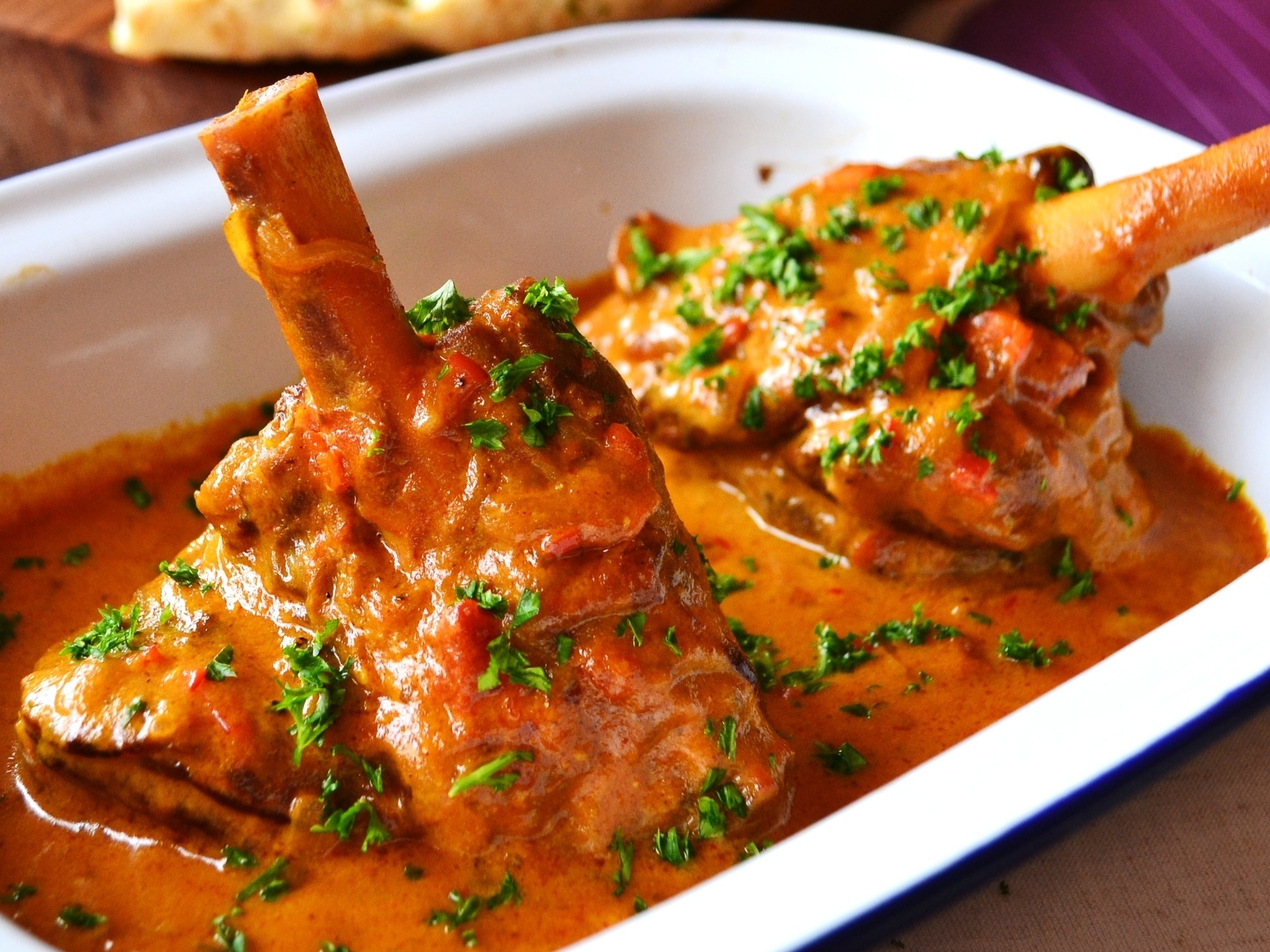
Lamb shanks, slowly braised in spices and yoghurt. A wonderful example of the Mughal influence on the Awadhi food tradition. This dish, nalli gosht, is typical of this cuisine.
If you like lamb shanks and are used to Mediterranean preparation you will be surprised. The fall-off-the-bone texture is the same, but the creaminess the yoghurt base gives is very different.
This is a rich, luscious approach to lamb shanks. It is not hot, but there is enough chilli to show it is an Indian dish, although I would say it tastes more like an Arab dish. Which, given its heritage, is no surprise.
My grandmother did not originally have a high opinion of lamb shanks. She thought it a cut of meat best suited for the dogs. There are several quite appalling early recipes featuring shanks in her notes, but there is one stand out, called pish-pash. She considered this a dish for children or invalids, and I will post it in due course. It is a lamb shank used to make stock and the stock is used to cook rice. It is actually a delightful dish.
When the cook first presented this Mughlai dish, she was annoyed. She ate it, but apparently under sufferance, according to her notes. This changed her mind, and it became a family favourite; but she did struggle with serving it to guests, because of what they may think about her serving this cut of meat.
When preparing this there are just a few things to bear in mind.
The times and temperatures below are about the minimum you should use. Food science tells us that temperatures below 140C will not break down the tissue in this cut of meat. Cooking it longer will certainly improve the dish.
You should also select the best shanks you can from the butcher. Smaller, meatier shanks would be best.
This is best served as a feature dish. We would serve with plain rice, and possibly a simple vegetable dish such as bean poriyal.
the recipe
about
equipment
- small frypan
- wide pan with lid - oven-proof
ingredients
- 4 lamb shanks - see notes
for the spice pastes
- 2 tsp coriander seeds
- 2 tsp cumin seeds
- 1½ tbsp white poppy seeds
- 50 g ginger - coarsely chopped
- 8 cloves garlic - coarsely chopped
- 100 ml yoghurt
- 3 tomatoes - pulp removed and chopped
for cooking
- 4 tbsp vegetable oil
- 5 cloves
- 1 stick cassia
- 5 green cardamom pods
- 1 blade mace
- 1 tsp black peppercorn
- 1 tsp caraway seeds
- 2 red onions - thinly sliced
- 1 tsp salt
- 1 tsp garam masala
- 1 tsp Kashmiri chilli powder
for serving
- 20 g ginger - cut into fine matchsticks
- ½ cup coriander leaves
- 50 g almonds - flaked and toasted
instructions
- Preheat oven to 140 °C
- Place a small frypan on medium heat and add the coriander and cumin seeds. Toast the spices until they become aromatic then remove from the heat. When cool enough to handle grind to a fine powder. Set aside.2 tsp coriander seeds, 2 tsp cumin seeds
- Grind the poppy seeds to a fine paste using as little water as possible. Set aside.1½ tbsp white poppy seeds
- Make a paste with the ginger and garlic using as little water as possible. Set aside.50 g ginger – coarsely chopped, 8 cloves garlic – coarsely chopped
- Make a smooth paste of the yoghurt and tomatoes and set aside.100 ml yoghurt, 3 tomatoes – pulp removed and chopped
to cook
- Using an oven-proof deep pan that has a lid, heat the oil over low heat then add the whole spices to the pan and cook until the spices sizzle.4 tbsp vegetable oil, 5 cloves, 1 stick cassia, 5 green cardamom pods, 1 blade mace, 1 tsp black peppercorn, 1 tsp caraway seeds
- Add the onions and salt, and fry for ten minutes. You want the onions to soften and to start turning brown on the edges.2 red onions – thinly sliced, 1 tsp salt
- Increase the heat to medium and add the ginger and garlic paste. Fry, stirring gently for two minutes or until the garlic smells cooked. The onions will continue to darken during this process.
- Add the tomato and yogurt paste, half a teaspoon of the garam masala, the ground cumin, coriander seeds and the chilli powders. Mix well, and continue to fry for another five minutes, stirring often, until the mixture starts to release oil.½ tsp garam masala, 1 tsp Kashmiri chilli powder
- Add the shanks to the pan and add enough water to almost cover the shanks. Mix well, making sure the shanks are well covered by the masala. Bring to a simmer, mixing frequently.4 lamb shanks – see notes
- Cover the pan and place it into the oven. Cook for 4½ hours, turning the shanks every 30 minutes. Gently stir and spoon the gravy over the shanks.
- Increase oven to 200 °C. Remove the pan from the oven and add the poppy seed paste. Gently mix the gravy, taking care not to break up the meat. Return the uncovered pan to the oven. Cook for a further 30 minutes to reduce the gravy and brown the shanks.
to serve
- Carefully remove the shanks from the pan, and place onto a warmed serving plate. The shanks will fall apart of you do not handle them gently. Cover the dish to keep warm.
- Place the pan over high heat. Add the ginger matchsticks and the remaining garam masala to the gravy and mix well. Adjust seasoning, if required. Cook for a further five minutes. The gravy will thicken noticeably.20 g ginger – cut into fine matchsticks, ½ tsp garam masala
- Pour the gravy over the shanks and garnish with the coriander leaves and almonds. Serve.½ cup coriander leaves, 50 g almonds – flaked and toasted
notes
private notes
This feature is only available to subscribers.