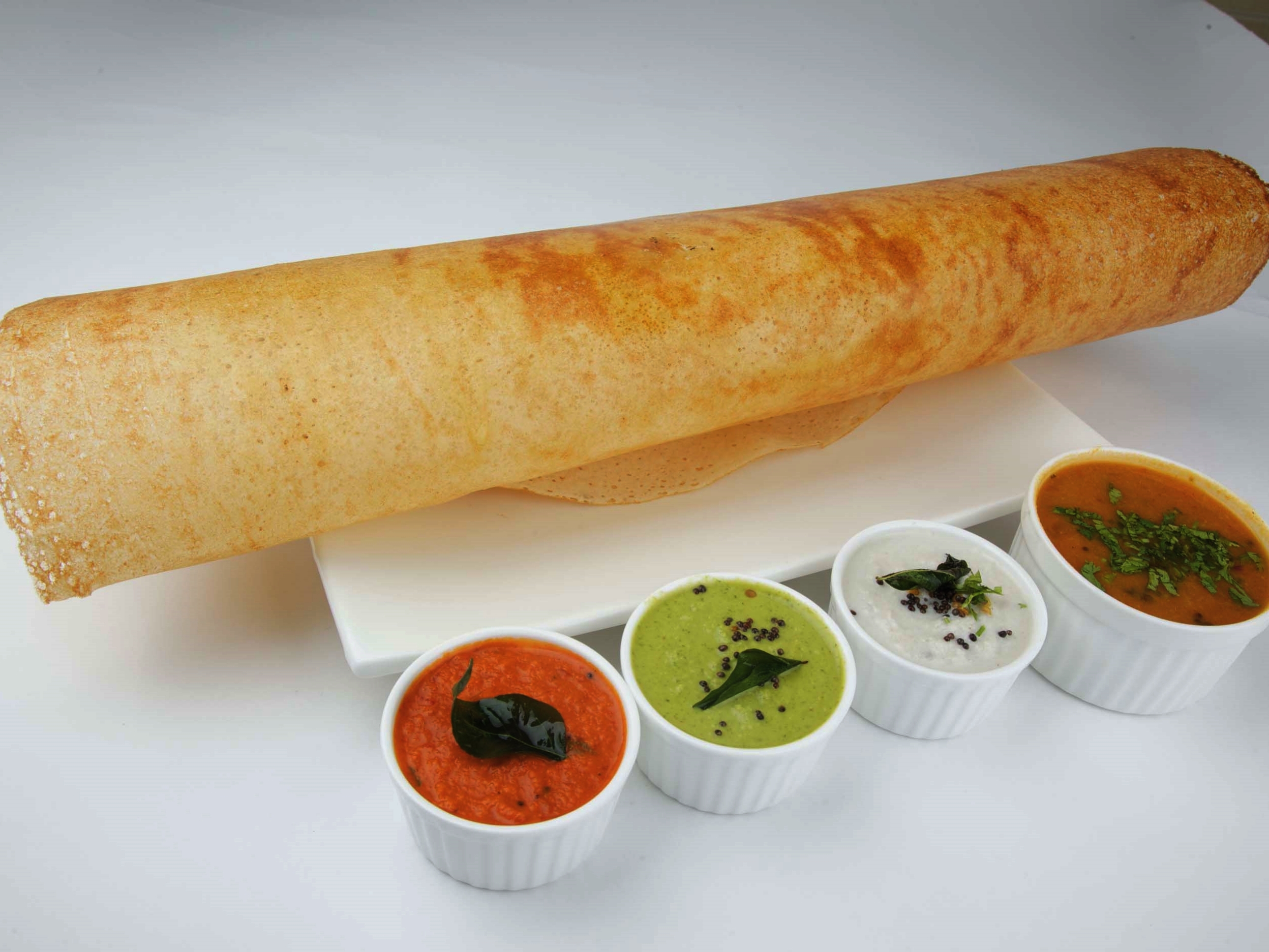
These crepes, or dosa, are made from the same fermented lentil and rice batter as idli. They are a ubiquitous staple food in south India.
Dosa are served at breakfast, lunch and dinner. They are also a common snack, and their variations are wide and varied. The most common variation, masala dosa, is described as one of the top 10 foods in the world in this article in the Huffington Post.
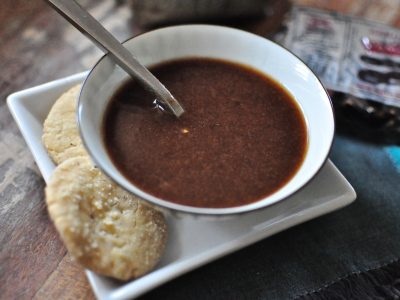
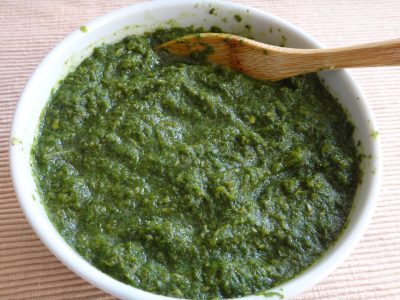
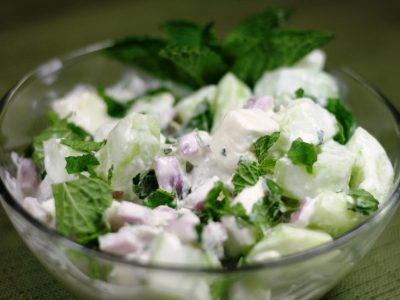
A plain dosa is usually accompanied by chutneys and sambar, and is a typical south Indian afternoon snack.
A simple family meal may start with sambar, coconut chutney and a dosa. Second course might be rasam, and end with curd rice.
Dosa are gluten-free and are a great substitute for the common flour-based breads, such as roti and naan.
The technique is important in cooking dosa. But, as they are made every day in a large number of south Indian kitchens, how hard can it be? Well, the answer is that it is actually pretty hard. The two key things are to make sure that the pan is hot enough to brown the dosa, but not too hot to prevent the spreading of the batter. The second part is to make sure that the batter is fresh and at the right consistency.
If you are unable to spread the batter on the pan, then add some water to the dosa batter. This will help in spreading the batter evenly on the pan. To get golden brown dosa, the pan should be hot. But the problem is that if the pan is very hot, then you cannot spread the dosa batter properly. Sprinkle water on the pan and then wipe it to bring down the temperature of the pan. Spread the batter, then return the pan to a high flame.
Spreading the batter is a matter of ladling the batter into the pan, then using the back of the spoon or ladle, spread the batter across the pan in a circular motion. You have to be quick, as the batter will start to cook quickly. Practice, practice and more practice helps here. Use as little oil as possible as dosa should not be oily. I use a silicone brush to spread a tiny amount of oil to help brown the edges, as explained in the recipe.
This video, from Sanjeev Kapoor’s Khana Khazana, is the best one I have come across to show the technique. Sanjeev Kapoor is a television chef, with a hugely popular, long-running program. It is one of the most-watched programs in India – which means one of the most-watched programs in the world.
Dosa cannot be cooked in advance, as they will become doughy and tough. They are best served straight from the pan.
This recipe assumes you have idli batter to hand. Yes, you can buy it from an Indian grocer, but our recipe for idli batter is very simple. Add time for the overnight fermentation process to the preparation time given below. If you are making your own batter, as recommended, you will need to start this the day before.
the recipe
about
equipment
- tawa
- ladle
ingredients
- 4 cups idli batter - see recipe
- 1 tsp salt - if not already added to batter
- ½ cup water
- 4 tbsp vegetable oil
instructions
- Add the water and salt (if not already added to the fermented batter) and fold gently until you have a smooth, pouring consistency.
- Heat a griddle or tawa over medium-high heat. Sprinkle with water and wipe with a wet cloth to reduce surface temperature.
- Lightly brush the tawa with a little oil. Ladle ½ cup of batter to the centre of the pan.
- Using the back of the ladle gently spread the batter with a circular motion from the centre towards the outside of the pan. You will end up with a series of rings or a spiral.
- Drizzle or brush ¼ teaspoon of oil around the edges of the dosa and add a few sprinkles on the top.
- Turn the heat up to high. After one or two minutes, the edge of the dosa will start to come off the tawa. Keep cooking until you can see the browned surface of the dosa through the thin parts. The dosa will lift from the tawa when it is cooked.
to serve
- Gently fold or roll dosa and serve with chutney, sambar, or a simple vegetable curry.
notes
- This recipe assumes you have the idli or dosa batter to hand. If not, you will need to start this recipe the day before and make some idli batter.
- Be careful when stirring the batter, as you do not want to break up the air bubbles caused by the fermentation.
private notes
This feature is only available to subscribers.