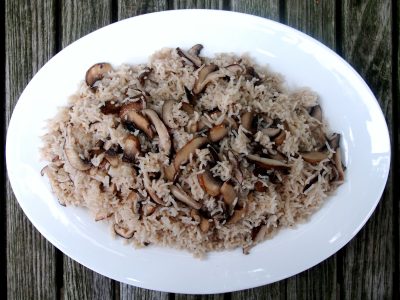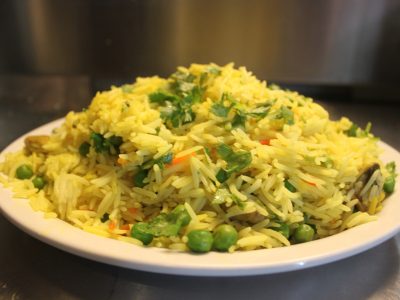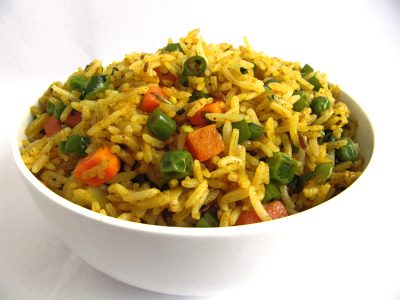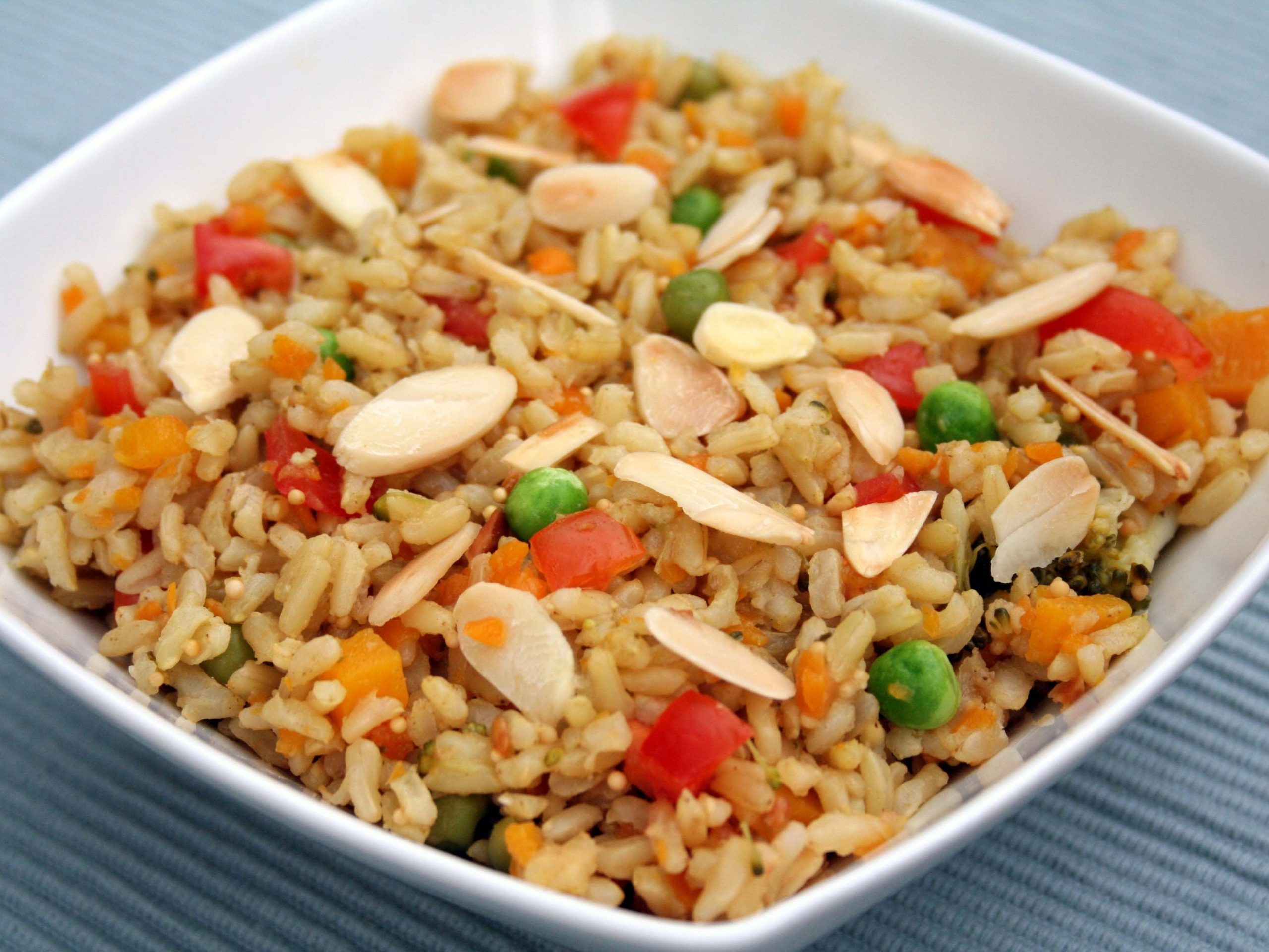
Kashmiri pulao is a rice dish from the far north of India.
The word Kashmir conjures up exotic images for most Westerners. This dish is certainly exotic but is very accessible. After eating this, you may wonder why you consider rice to be a plain dish. This is one of our favourite ways to prepare a pulao.
The Mughals influenced the cuisine of Kashmir, as did the much earlier Persians. There is a distinct middle eastern flavour to most of the cuisine, which is famous for using nuts and dried fruits from Central and Western Asia.
Kashmiri pulao can be slightly sweet and has a glorious texture. The amount and type of the nuts and fruit used will decide just how sweet the dish is.
Our favourite fruits are dried mango, dried papaya, and raisins. I have made this dish using fresh fruit – apple and pineapple, finely diced and added when you add the dried fruit. This was a wonderful variation. In fact, using fresh fruit and dried fruit is pretty good too, but be careful not to complicate the dish. Part of its charm is its subtlety.
Note that I have specifically called out dried figs and do not include them in the generic dried fruit. The figs are an important part of the taste – do not leave them out.
Do not stint on the saffron, but don’t overdo it. Too much saffron can ruin a dish with an overpowering medicinal taste.
the recipe
about
equipment
- large bowl
- deep pot with lid
ingredients
- 300 g basmati rice
for the saffron
- 50 ml milk - warm
- 1 pinch saffron threads
for cooking
- 2 tbsp vegetable oil
- ½ tsp cumin seeds
- 1 stick cassia - crumbled
- 3 cloves
- 3 green cardamom pods - broken open
- 1 indian bay leaf
- 1 red onion - finely sliced
- 1 tsp salt
- 20 g almonds - slivered
- 20 g raw cashews - broken into pieces
- 100 g dried fruit - finely diced
- 2 dried figs - finely diced
- 750 ml water
- 2 tbsp raw pistachios
- 50 g pomegranate seeds
for serving
- 1 lemon - juiced
- 1 tbsp almonds - flaked
instructions
- Place the rice in a large bowl and rinse it in cold water, using your hand to stir it thoroughly. Discard the water and repeat this step twice more to remove any excess starch. Note that after the third rinse that the water will not be clear but will be noticeably less cloudy than after the first rinse.300 g basmati rice
- Drain the rice, then cover with luke-warm water. Soak for 30 minutes.
- Add the saffron threads to the warm milk and set aside to steep.50 ml milk – warm, 1 pinch saffron threads
to cook
- Heat oil in a large pan on medium heat. Add the cumin seeds, cassia, cloves, cardamom, and bay leaf. Cook for 30 seconds, or until spices sizzle.2 tbsp vegetable oil, ½ tsp cumin seeds, 1 stick cassia – crumbled, 3 cloves, 3 green cardamom pods – broken open, 1 indian bay leaf
- Reduce the heat, then add the onion and sprinkle with ½ teaspoon of the salt. Fry for ten minutes until soft and coloured.1 red onion – finely sliced, ½ tsp salt
- Add the almonds, cashews, and dried fruit. Stir and fry for three minutes.20 g almonds – slivered, 20 g raw cashews – broken into pieces, 100 g dried fruit – finely diced
- Drain the rice and add it to the pot. Stir well to coat each grain with spiced oil.
- Add the water, the saffron-infused milk, the dried figs and ½ teaspoon of salt. Bring to the boil, mix well, then reduce heat to very low. Cover, and cook for 15 minutes. Do not open the post at this time or heat and steam will escape.2 dried figs – finely diced, 750 ml water, ½ tsp salt
- Remove from the heat, add the pistachios and pomegranate seeds then fluff the rice with a fork. Cover the pan with a tea towel and replace the lid. Allow it to stand for another ten minutes.2 tbsp raw pistachios, 50 g pomegranate seeds
to serve
- Gently stir through the lemon juice, sprinkle with the almonds, and serve.1 lemon – juiced, 1 tbsp almonds – flaked
notes
private notes
This feature is only available to subscribers.