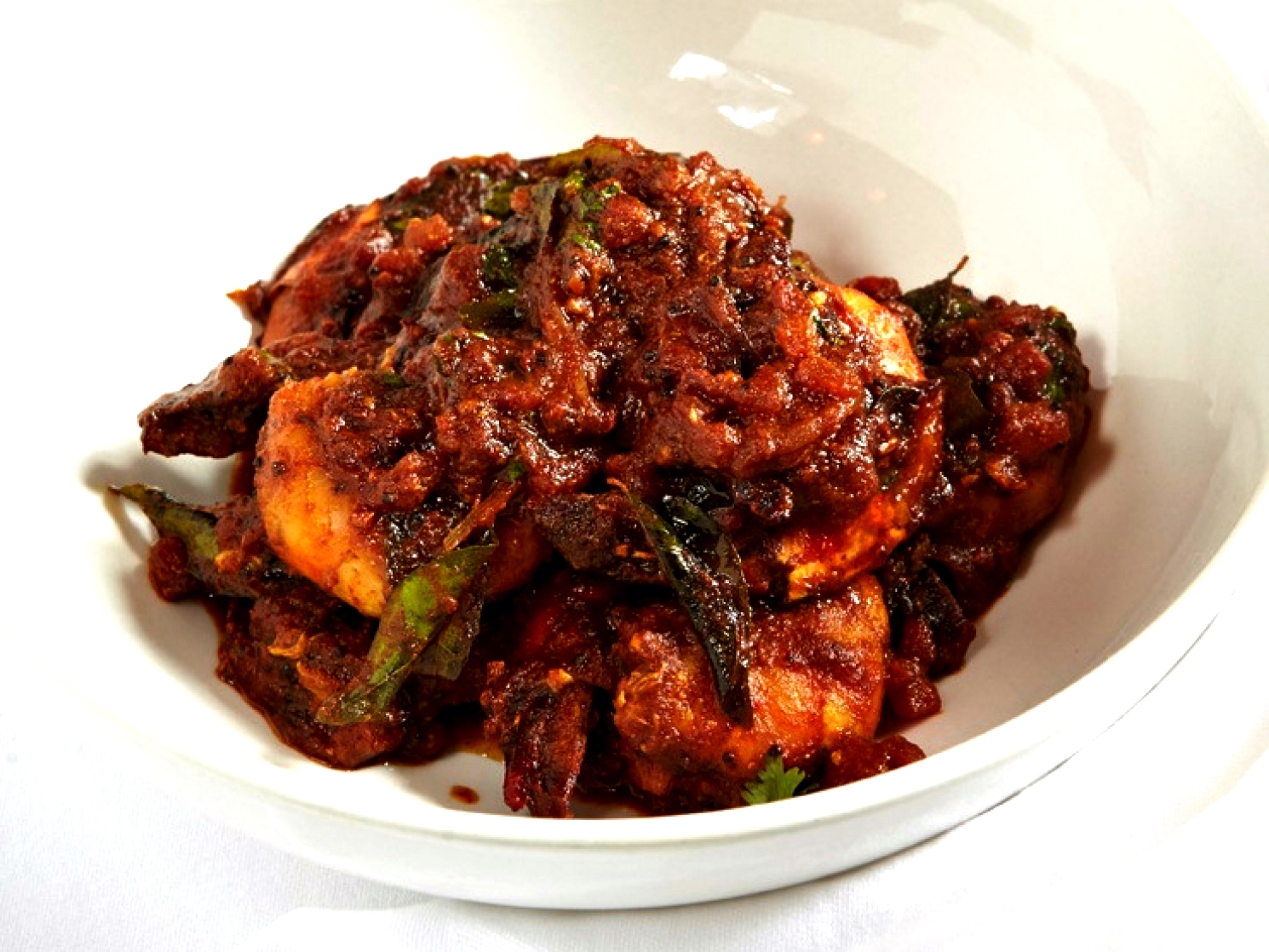
A good prawn curry is hard to resist, and this is a good prawn curry. Hot and tangy, this Malabar prawn curry highlights the sweet flavour of the prawns. The dish has a lot of tamarind and tomato giving it a very intense flavour, It is called malabari jinga masala.
This dish is our most requested way to serve prawns.
The recipe originates from the Malabar Coast, the south-western coastline of India, just south of Goa. This recipe comes from my grandmother’s time in Goa.
In my grandmother’s time this was a very special dinner dish. In her times, fish and seafood needed very careful handling as there was no refrigeration as we know it. The prawns would have been bought from the market before dawn by her cook, then stored on the ice block by the kitchen. The shelling of the prawns was done just before cooking.
Malabari dishes feature seafood and have a cosmopolitan feel, as this coastline has centuries of influence from trading partners from many parts of the world.
This cosmopolitan influence is also reflected in the diversity of the ethnic mix, with large Muslim, Christian and Jewish communities. This ethnic diversity has brought together a range of techniques and ingredients, making this cuisine very different from other coastal parts of India.
This is a classic Malabari dish. It is meant to be hot, it has the tang of tamarind, and allows the flavour of the prawns to feature.
This recipe does not use coconut milk. This recipe is about the intense flavour of the reduced tomato and tamarind base.
It is important to get the sauce right, particularly the thickness and texture. You do not want a soupy sauce, instead, you want a thick, intense sauce that clings to the prawns.
Once the sauce is just right, you cook the prawns very quickly in it. You cannot allow the prawns to simmer, as they will lose their flavour and become hard. Consequently, this is a dish that does not lend itself to being cooked in advance – although you could make the sauce in advance and cook the prawns just before serving. This also means that it doesn’t freeze well. You just must eat it all in one sitting. And that isn’t exactly a problem.
As this is a feature dish, we generally serve it with plain basmati rice or chapatis. We usually serve a kachumber, too.
the recipe
about
equipment
- small frypan
- food processor - see notes
- kadai
ingredients
- 1 kg prawns - shelled and deveined
- 2 tsp cumin seeds
- 2 tsp coriander seeds
- 1 tsp fenugreek seeds
- 75 g shallot - chopped
- 3 cloves garlic - chopped
- 40 g ginger - chopped
- 3 red chillies - chopped
- 6 tomatoes - pulp removed and chopped
for cooking
- 4 tbsp gingelly oil - see notes
- 1 tbsp black mustard seeds
- 20 curry leaves
- 2 tsp Kashmiri chilli powder
- 1 tsp ground turmeric
- 250 ml tamarind water
- 2 red chillies - coarsely sliced
- 1 tsp salt
to serve
- 1 tsp garam masala
- ½ cup coriander leaves
instructions
- Heat a small pan over medium heat. Once hot, put the coriander, cumin and fenugreek seeds into the heated pan. Toast the spices for a few minutes until they become aromatic. Remove from the heat and allow to cool. Once cooled, grind spices to a fine powder and set aside.
- Add the shallots to a food processor and blend to a smooth paste, adding as little water as possible, Remove from processor and set aside.
- Add the ginger, garlic and three red chillies to the food processor, and again adding as little water as possible, blend to a smooth paste. Remove from processor and set aside.
- Add the tomatoes to the food processor and blend to a smooth puree. Remove from processor and set aside..
to cook
- Heat the oil in a kadai or wok over medium heat. When hot, add the mustard seeds and fry for 30 seconds, then stir in the shallot paste and fry gently for about 10 minutes, or until softened and lightly golden-brown.
- Add the ginger, garlic and chilli paste. Stir well, and fry for a further 5 minutes, until the raw garlic smell has gone.
- Add the curry leaves, chilli powder, coriander, cumin and fenugreek powder, and turmeric. Stir well and fry for two minutes.
- Add the tomato puree and mix well. Simmer for about 15 minutes. You need the raw tomato smell to disappear and the sauce to become rich and reduced. The oil should start to separate from the mixture.
- Add the tamarind water, sliced red chillies and salt. Stir well to get the sauce recombined with the oil. Simmer for 5 minutes.
- Add the prawns, cook for a further 10 minutes or until they are pink, and just cooked through.
to serve
- Immediately remove pan from the heat to stop prawns over-cooking and transfer to a serving dish. Sprinkle with the garam masala and coriander leaves and serve.
notes
- Fishmongers may sell prawns that have already been shelled and deveined. If that is the case, you only require around 600g (21oz) of prawns.
- Choose the largest prawns you can get for the best appearance of this dish.
- If you don’t have a food processor, use a mortar and pestle. The paste does not have to be at puree consistency. If that is too hard, just chop the ingredients very finely, and increase the cooking time when you add the tomatoes. It won’t be the right consistency, but it willl work.
- Gingelly oil is Indian sesame oil. It is very different from the Asian sesame oil, being much less intense in flavour. Substitute with vegetable oil if unobtainable.
private notes
This feature is only available to subscribers.
You are right. This is a good prawn curry.
my favourite prawn curry