
a simple non-vegetarian menu
I have spoken with several people about how to get started using this cookbook. Many are capable cooks but have yet to explore this cuisine. And many are people who would not describe themselves as capable. All of them have said to me they find this cookbook quite imposing.
This simple non-vegetarian menu is the type of meal we often prepare for ourselves. It also makes a good starting place for people new to this cuisine. It is straightforward to prepare, is not time-consuming and doesn’t need special equipment of exotic ingredients.
There is a related post that deals with a similar, but vegetarian menu.
From its beginning this cookbook reflected what I produced in our own kitchen. It is what I cook for the family and when entertaining. I was lucky to have recipes and notes from over a hundred years ago. These notes were not from the person cooking the dish, but the Memsahib supervising the cook. Because of this, it assumed prior experience and access to the right ingredients.
Consequently, I am going to provide more basics and accessible dishes. This is the first such article and suggests a starting point for using this cookbook. This article contains a simple non-vegetarian menu an adequate cook might produce from this cookbook.
For this first meal I advocate keeping it simple. Don’t bother with entrees or desserts – that can come later. Don’t try to make pickles and chutneys just yet. That too will come later.
The menu I suggest is rice, chicken korma and a salad. For dessert you might serve some fresh fruit, such as rockmelon, berries, or watermelon. This will help soothe your palate.
Note that the chicken korma recipe has no chilli. This is not a hot Indian food meal. That may come later.
This exact menu is a family meal we often serve at home.
So, some guidelines.
- Follow the recipe as presented. These have been cooked many, many times and work. You think you know how to cook rice? Please use my method. Techniques such as toasting the fresh whole spices before grinding is a fundamental method, and almost every recipe in this book uses it.
- Don’t make substitutions. For example, dried ginger and fresh ginger are quite different ingredients. Further, don’t substitute the chicken with something else – the spices, ingredients and method are specific to this dish.
- Source the right ingredients. Other than what may be considered pantry items, this menu only needs asafoetida, which is a commonly used ingredient in this cooking. A quick trip to any Indian grocer will solve this. You should only buy the smallest package as you will use it often, but not much at a time.
How do you prepare this?
Go shopping and get all the ingredients. Marinate the chicken the night before. You might prepare the salad before you start cooking, but don’t add the dressing until you serve. Make sure you keep the cucumber juice to make the dressing.
Before cooking, soak the rice. This is a suitable time to take the chicken out of the refrigerator and infuse the saffron.
Prepare all your ingredients and have them at hand.
Start cooking the rice. Once you have sealed the pot, cook the chicken. If the chicken takes longer to cook, that is fine, as the rice will continue to steam in its own heat. Don’t overcook the chicken.
Once everything is cooked, dress the salad, and follow the presentation tips in the recipes.
Let us know in the comments how you went?
the menu
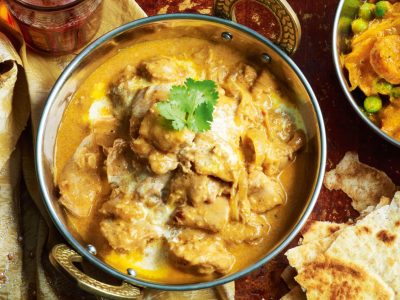
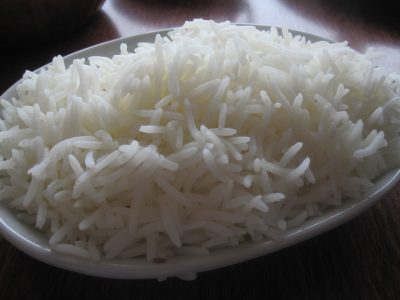
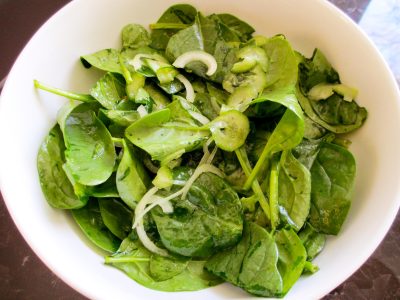
chicken korma - lucknowi style
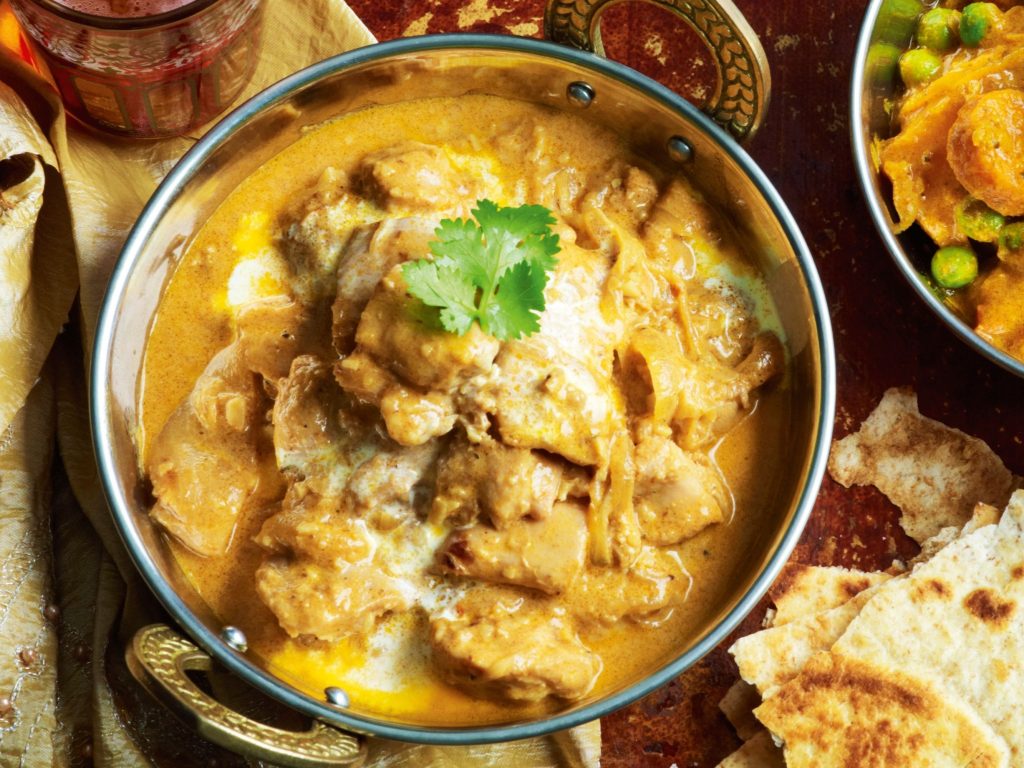
equipment
- small frypan
- large bowl
- wide pan with lid
ingredients
- 800 g chicken thigh fillets - skin removed and cut into medium pieces
for the marinade
- 1 tbsp coriander seeds
- 2 tbsp ghee
- 1 stick cassia - crumbled
- 2 indian bay leaves
- 8 green cardamom pods - broken open
- 6 cloves
- 1 tsp cumin seeds
- ½ tsp salt
for cooking
- 2 tbsp milk
- ¼ tsp saffron threads
- 2 tbsp ghee
- 1 tsp asafoetida powder
- 1 tsp ginger powder
- 300 ml yoghurt
for serving
- ½ cup coriander leaves
- 1 tbsp almonds - slivered
instructions
to marinate
- Place a small frypan on medium heat and add the coriander seeds. Toast them until they become aromatic then remove them from the heat. When cool enough to handle, grind to a fine powder. Set aside.
- Put the ghee in the small pan over medium heat. When hot, put in the cassia, bay leaves, cardamom pods, cloves and cumin seeds. When they start to sizzle, take off the heat and allow them to cool.
- Once cooled, remove and reserve the bay leaves. Make a smooth paste with the spice mix, the ground coriander seeds, salt and a little water.
- Place the chicken in a mixing bowl, cover with the paste from the blender and mix well, ensuring that the chicken is evenly coated. Add the reserved bay leaves. Cover, refrigerate and marinate overnight.
to cook
- Warm the milk, then add the saffron threads. Stir and set aside to infuse.
- Heat the ghee in a wide frying pan over medium heat and when hot, add the asafoetida and ginger powder. Stir and fry for 30 seconds.
- Add the chicken and marinade, mix well, and cook for five minutes or until the chicken starts to colour.
- Reduce the heat to low and add the yoghurt one tablespoon at a time, ensuring it is well combined before adding the next tablespoon. Cook the chicken, uncovered, on a very low simmer for 15 minutes. Do not allow it to boil, or the yoghurt will split and curdle.
- When the chicken is almost cooked, raise the heat to thicken the sauce, stirring gently to not break up the chicken. This will take around 10 minutes.
- Stir in the saffron infused milk and mix well.
to serve
- Remove from heat, then sprinkle with coriander leaves and almonds to serve.
notes
private notes
This feature is only available to subscribers.
nutrition
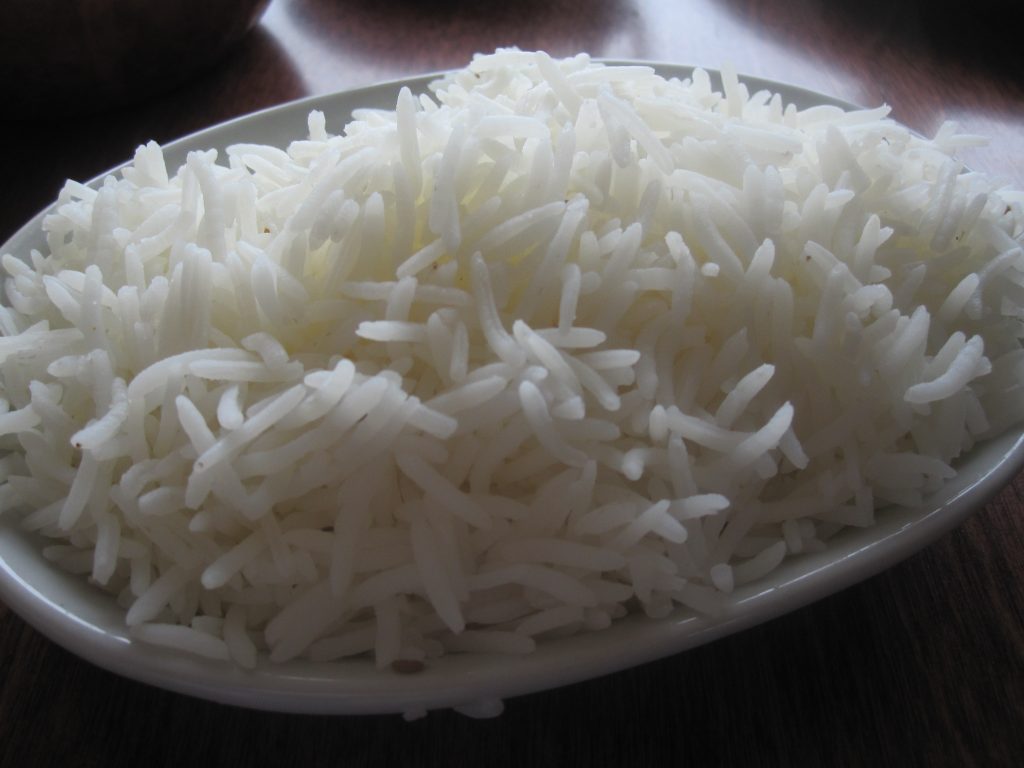
simple basmati rice
equipment
- large bowl
- deep pot with lid
ingredients
- 400 g basmati rice
- 750 ml water
- ½ tsp salt
instructions
- Place the rice in a large bowl and rinse it in cold water, using your hand to stir it thoroughly. Discard the water and repeat this step twice more to remove any excess starch. Note that after the third rinse that the water will not be clear but will be noticeably less cloudy than after the first rinse.
- Drain the rice, then cover with luke-warm water. Soak for 30 minutes.
- Drain the rice and put it into the pot. Add the water and salt. Bring to a boil over medium heat, uncovered.
- When it starts boiling, cover and reduce the heat to very low. Cook for 15 minutes. Do not open the pot during this time.
- Once cooked, turn off the heat, then open the pot and quickly fluff the rice with a fork, Cover the pot with a tea-towel and replace the lid. Allow to stand for a further ten minutes before serving.
notes
private notes
This feature is only available to subscribers.
nutrition
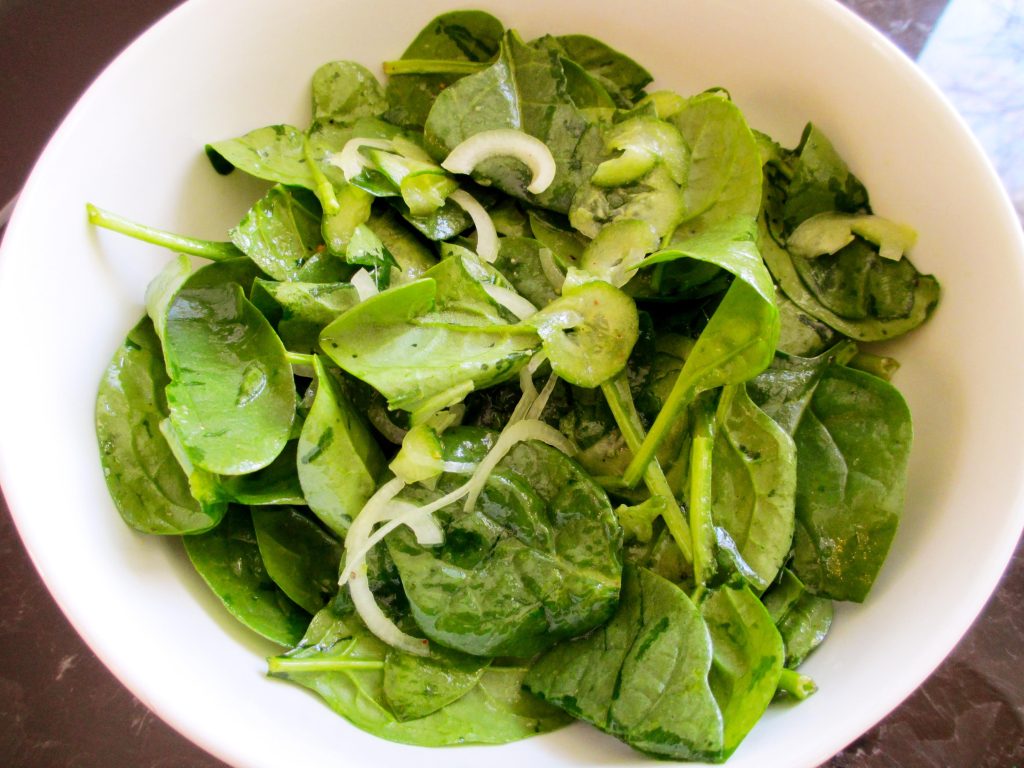
spinach and cucumber salad with yoghurt dressing
equipment
- sieve
- small bowl
ingredients
- 120 g spinach leaves
- 2 lebanese cucumbers
- 1 red onion - halved and sliced
for the dressing
- 100 ml yoghurt
- 1 tbsp cucumber juice - see instructions
- ½ lemon - juiced
- ½ tsp cumin seeds
- ¼ tsp salt
instructions
- Wash and dry the spinach.
- Remove the ends of the cucumbers and cut lengthwise into halves. Using a teaspoon, scrape the pulp and seeds from the centre of the cucumbers and set it aside. Cut the cucumbers into batons.
- Put the cucumber pulp into a sieve and, using the back of a spoon, force the juice from the pulp into a small bowl. You only need around one tablespoon, which is about one cucumber.
- Add the remaining dressing ingredients to the juice and stir well.
to serve
- Place spinach leaves, cucumber, onion, and dressing into a dish and mix well.
private notes
This feature is only available to subscribers.