
Parsi family lunch
This is a traditional Sunday family lunch for a well-to-do Parsi extended household.
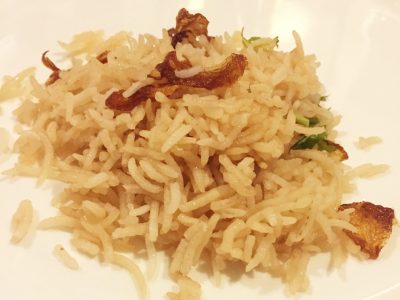
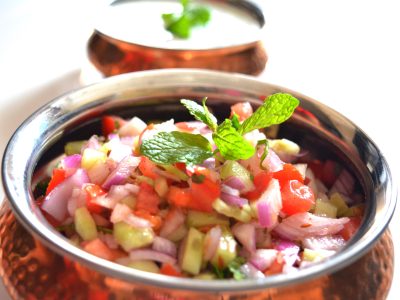
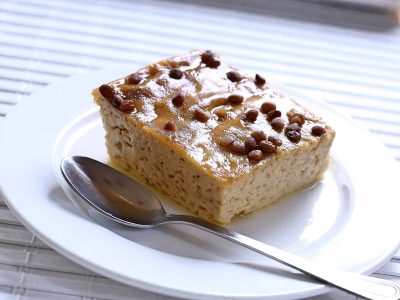
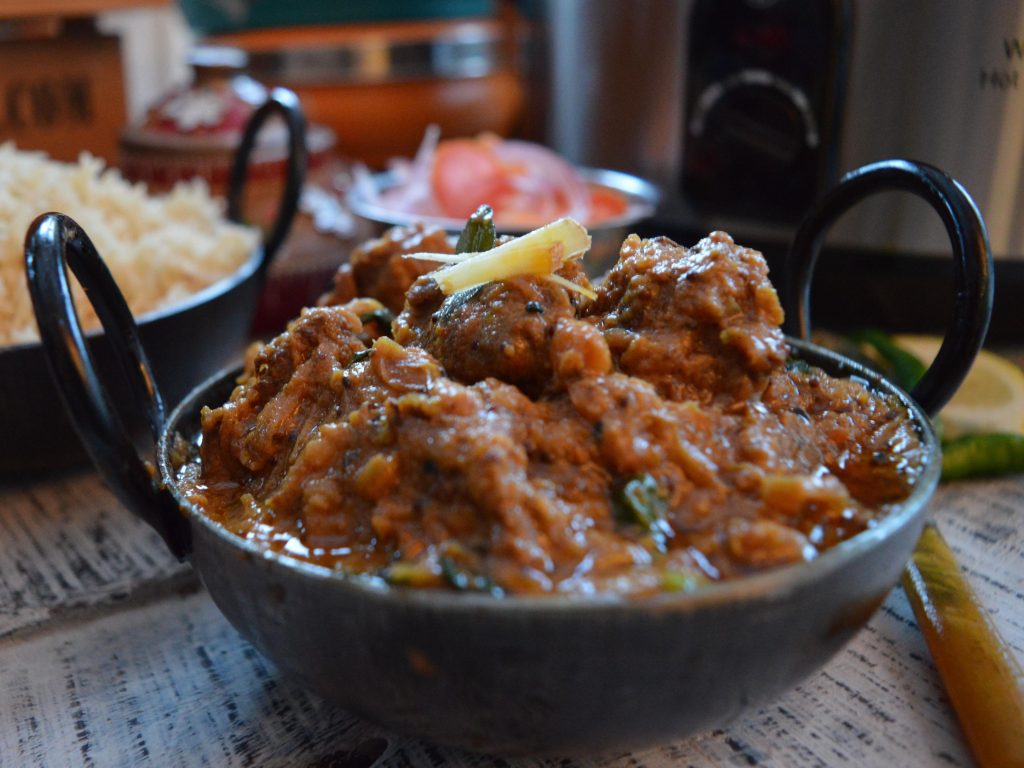
It features a lamb dish, dhansak, served with the traditional accompaniments of brown rice and kachumber. Dessert is the famous Parsi baked egg custard or lagan nu custard. This would make an ideal winter meal.
As presented here it would serve 4 people.
It does not need a lot of time to make this menu.
I would prepare the lagan nu custard first, to allow it to cool once it has finished cooking. Once it was in the oven, I would then start on the dhansak, and once that was cooking, I would prepare the kachumber, giving it time to be chilled before serving. I would make the rice as late as possible so that it can go straight from the pot to being served once it is ready.
the menu
main course
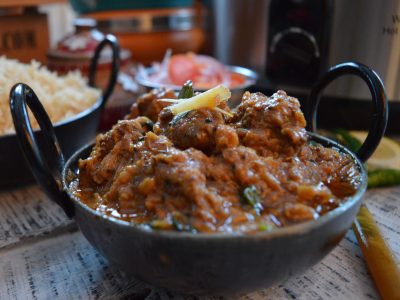
dhansak
equipment
- large pot
- small frypan
- wide pan with lid
ingredients
- 800 g lamb leg - trimmed and diced
for the dal
- 60 g split pigeon peas - (toor dal)
- 60 g split red lentils - (masoor dal)
- 60 g split black lentils - (urad dal)
- 1 eggplant - chopped into small chunks
- ½ butternut pumpkin - chopped into small chunks
- 1 brown onion - chopped into small chunks
- 1 tsp jaggery
- 1 tsp salt
- ½ cup coriander stalks - coarsely chopped
- ½ cup mint leaves - coarsely chopped
- 500 ml water
for the paste
- 1 tsp cumin seeds
- 1 tbsp coriander seeds
- ½ stick cassia - crumbled
- 6 green cardamom pods
- 12 black peppercorns
- 1 star anise
- 6 cloves garlic
- 30 g ginger
- 2 red chillies
- 2 tbsp dried fenugreek leaves
for the lamb
- 2 tbsp mustard oil
- 1 brown onion - chopped
- 1 tsp ground turmeric
- 3 tomatoes - finely chopped
- 100 ml tamarind water
- 250 ml water
for serving
- ½ cup coriander leaves - chopped
- ½ cup mint leaves - chopped
instructions
to prepare the dal
- Put the lentils, eggplant, pumpkin, onions, jaggery, salt, chopped coriander and mint into a pan with the water. Bring to the boil then simmer for 20 minutes until the lentils have softened. Set aside.
to prepare the paste
- Put the cumin and coriander seeds, the cassia stick, cardamon pods, peppercorns and the star anise into a small pan on medium heat. Gently toss the spices while toasting until they become more aromatic. Remove from the heat, set aside and allow to cool.
- Once cooled, grind the spices with the garlic, ginger and chillies, adding as little water as possible to make a thick paste.
- Add the dried fenugreek leaves to the paste and mix well. Set aside.
to cook
- Heat the mustard oil on medium heat in a wide pan and fry the chopped onions for 10 minutes, stirring frequently, or until they are golden brown.
- Add the spice paste and turmeric, mix well and fry for a few minutes until well combined very aromatic.
- Add the tomatoes and tamarind water then fry for about five minutes, stirring occasionally, until the masala is thick and glossy. The oil should be separating from the paste.
- Add the lamb and stir to coat with the masala. Fry for a few minutes, stirring often, until the meat is lightly browned. Reduce the heat, add the water and cover the pan. Simmer the lamb, stirring occasionally, for about 40 minutes or until cooked through and tender. Add a little more water if the mixture starts to dry.
- Puree or mash the reserved lentil and vegetable mix and add to the lamb. Bring the mixture up to a simmer, and cook for 10 minutes, stirring often to stop lentils sticking to bottom of the pan. Taste and add salt, if required.
to serve
- Remove from heat, place in warmed serving dish, sprinkle with coriander and mint leaves and serve.
notes
private notes
This feature is only available to subscribers.
nutrition
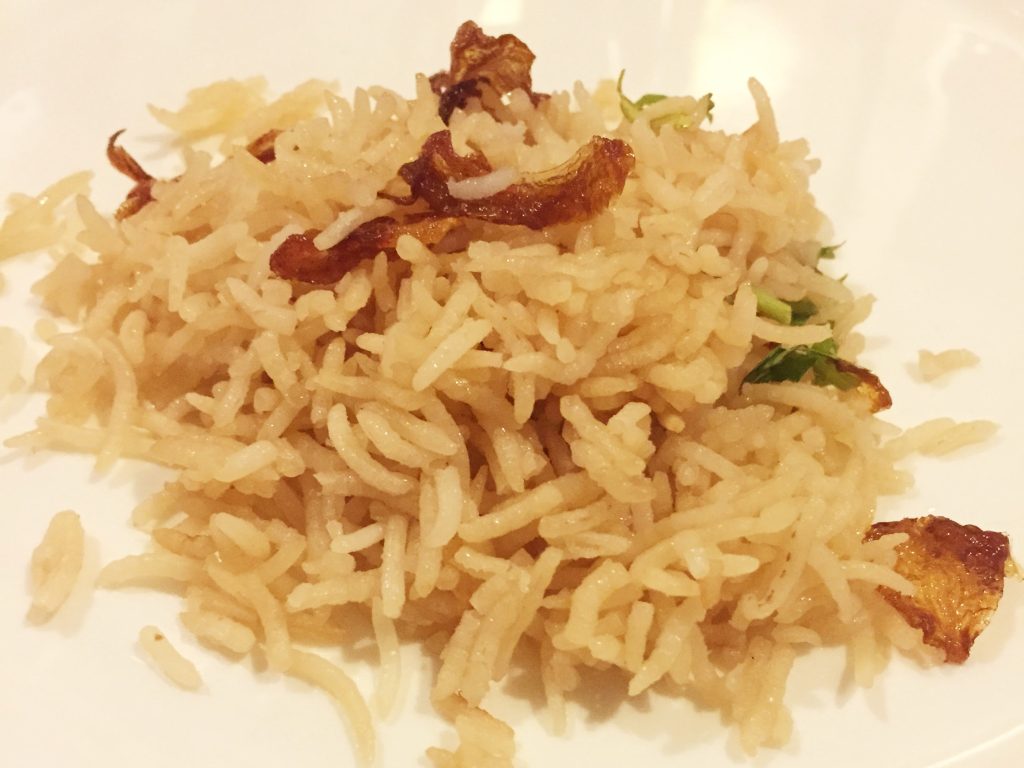
Parsi brown rice
equipment
- large bowl
- deep pot with lid
- slotted spoon
ingredients
- 400 g sella rice
for cooking
- 2 tbsp ghee
- 1 stick cassia
- 4 green cardamom pods - broken open
- 4 cloves
- 4 black peppercorns
- 1 star anise
- 1 indian bay leaf
- 2 brown onions - halved and thinly sliced
- 1 tsp salt
- 2 tsp jaggery - grated
- 1 litre water
instructions
- Place the rice in a large bowl and rinse it in cold water, using your hand to stir it thoroughly. Discard the water and repeat this step twice more to remove any excess starch. Note that after the third rinse that the water may not be clear but will be noticeably less cloudy than after the first rinse.
- Drain the rice, then cover with luke-warm water. Soak for 1 hour.
to cook
- Using a deep, thick-bottomed pot with a tight lid, heat the ghee over medium-low heat. Add the cassia, cardamom, cloves, black peppercorns, star anise and bay leaf. Fry until they become fragrant.
- Reduce the heat to low. Add the sliced onions and sprinkle with the salt. Stir, and fry the onions until they are golden brown. This may take twenty minutes or longer. Increase the heat and fry until the onions turn a deep brown. Stir frequently as you do not want the onions to burn.
- Add the jaggery and stir. Continue frying and stirring the onions and jaggery to ensure even browning. The sugar and onions will caramelise and turn a deep brown.
- Once the onions have browned, use a slotted spoon to remove a tablespoon of them and set these aside on kitchen paper. They will become crisp by the time you use them to garnish the completed dish.
- Drain the rice and add to the pot. Gently stir to cover the grains with the ghee, onions, and spices. Add the water and stir. Bring to a boil, cover tightly, then reduce heat to very low. Cook for 25 minutes. Do not open the lid during this time or heat and steam will escape.
- Turn the heat off. Uncover the pot and quickly fluff rice with a fork. Cover the pot with a tea towel and replace the lid. Do this as quickly as possible because you do not want to lose heat or steam. Leave the rice to finish cooking in its own heat for a further ten minutes.
to serve
- Uncover the pot and fluff the rice again. Remove the whole star anise and cassia stick. Garnish with the reserved onions and serve.
notes
private notes
This feature is only available to subscribers.
nutrition
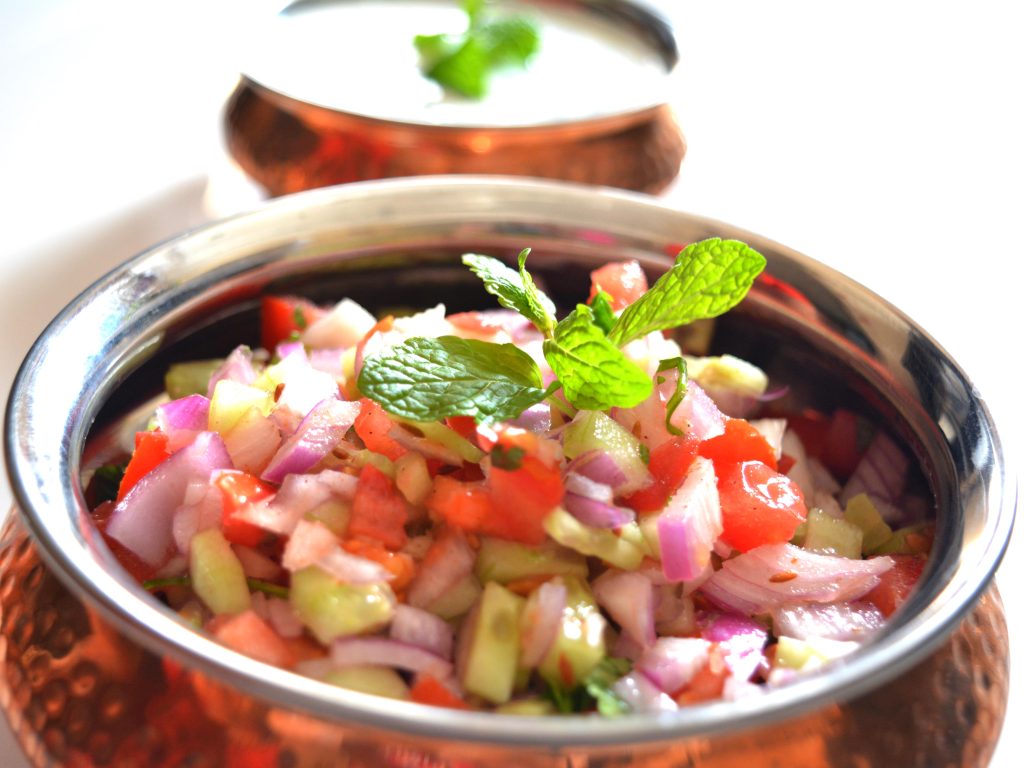
kachumber
equipment
- small bowl
ingredients
- 1 red onion - coarsely diced
- ½ tsp jaggery - grated
- ½ tsp salt
- 2 tbsp brown vinegar
- 1 tbsp coriander stalks - finely chopped
- 2 tomatoes - coarsely diced
- 1 lebanese cucumber - pulp removed and diced
for serving
- 1 tbsp mint leaves
instructions
- Combine onion, jaggery, salt, vinegar and coriander stalks in a bowl. Cover and briskly shake to separate onion layers and coat with vinegar. Let stand for ten minutes.
- Drain the excess vinegar.
- Add the tomatoes and cucumber, stir gently, and refrigerate for one hour or until ready to serve.
to serve
- Garnish with mint leaves and serve.
private notes
This feature is only available to subscribers.
nutrition
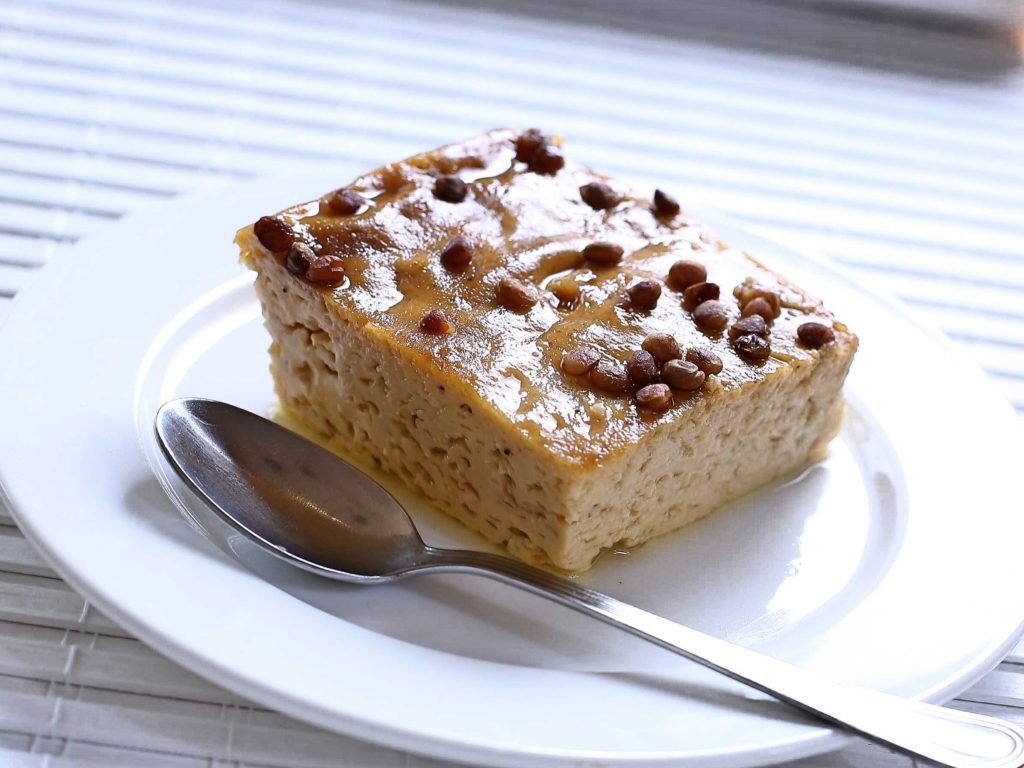
Parsi baked egg custard
ingredients
- 4 eggs - large, free range
- 500 ml milk - full cream
- ¼ tsp saffron threads
- 1 tsp ghee - to prepare baking pan
- 6 green cardamom pods
- 750 ml evaporated milk
- 150 ml pure cream
- ½ cup jaggery - grated
- 1 tsp rosewater
- ½ cup almonds - slivered
- ¼ nutmeg - grated
- ¼ cup charoli nuts
- ¼ cup raw cashews
- ¼ cup raisins
- 1 tbsp ghee - crumbled into small pieces
instructions
- Preheat oven to 175C
- Warm ¼ cup of the milk and add the saffron threads to infuse. Set aside for 5 minutes.
- Grease a small baking pan with ghee.
- Remove the seeds from the cardamom pods and crush.
- Lightly beat the eggs in a large bowl.
- Add the remaining milk, the saffron-infused milk, the evaporated milk, cream, jaggery, rose water, half of the almonds and half of the nutmeg and cardamom. Mix well.
- Transfer to the greased baking pan, sprinkle with the rest of the almonds, nutmeg and cardamom, the raisins, charoli nuts, cashews and small ghee pieces.
- Place baking pan into a larger pan or tray and fill the larger pan with hot water. Place into the preheated oven for 45 minutes, or until the top of the custard has browned and a skewer comes out clean from the middle.
- Remove from oven and allow to cool. If serving cold, refrigerate for at least one hour.
to serve
- Carefully remove from pan and cut into squares or diamonds.
notes
- Use the smallest baking pan you can fit the mixture into. Try for a mixture depth of at least 4cm in the pan.
- The technique of using a baking dish in a tray of water to ensure even cooking. Make sure the water comes well up the sides of the baking pan with the custard.
private notes
This feature is only available to subscribers.